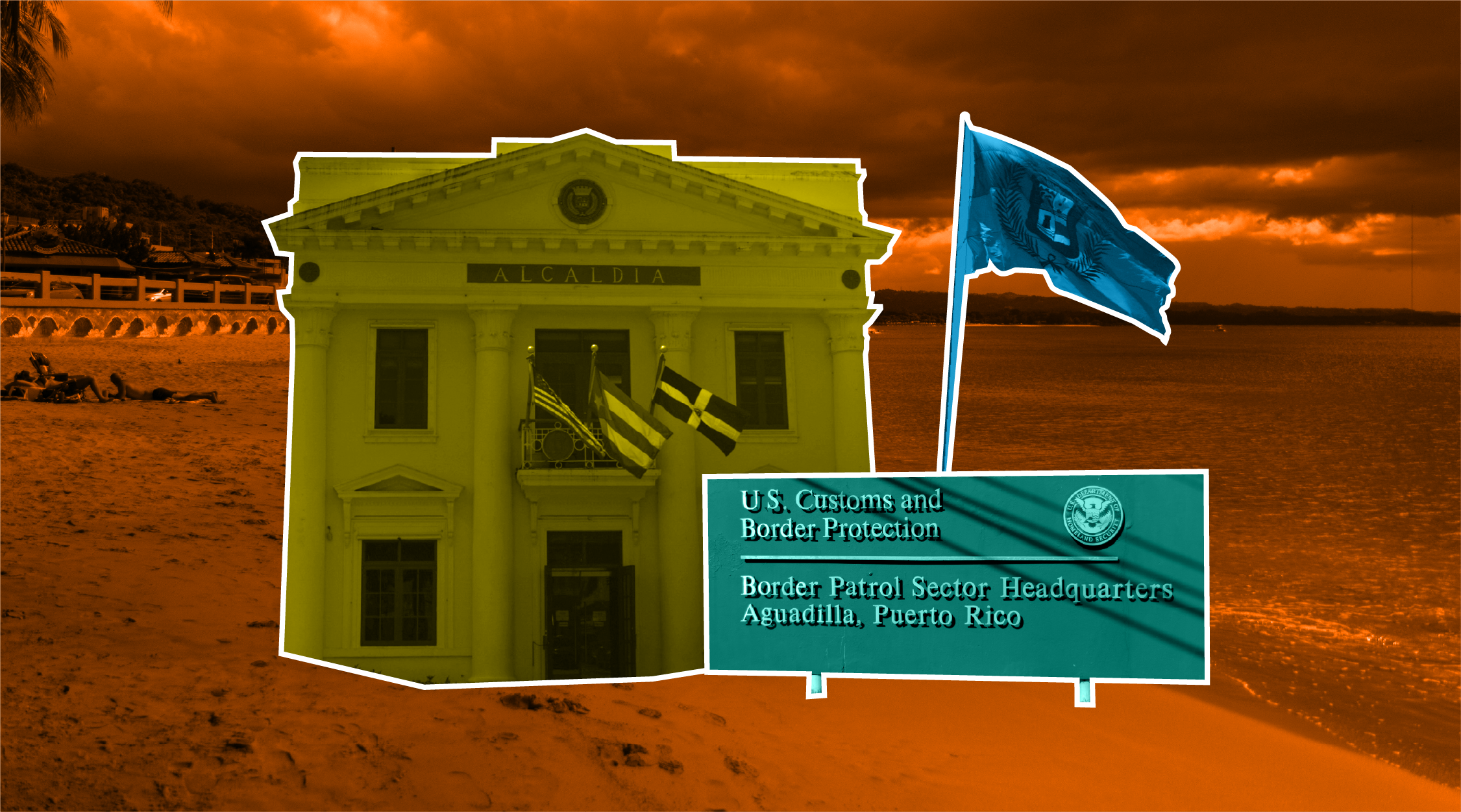
Aguadilla: Can a “sanctuary city” patrol the border?
En total, 13 municipios de Puerto Rico colaboran con las autoridades fronterizas para patrullar el litoral en el marco de la Operación Stonegarden
AGUADILLA — After signing the ordinance that made Aguadilla a “sanctuary city” and prohibited its employees from assisting immigration agents, Mayor Julio Roldán Concepción told the U.S. Customs and Border Protection (CBP) that his city will continue to collaborate with Operation Stonegarden, a security program which funds coastal patrols to search for undocumented immigrants and the smuggling of weapons and drugs.
The exchange between the mayor and Customs happened after the Department of Public Safety (DSP) tried to cut off the city’s Stonegarden funding, according to documents obtained by 9 Millones. These documents reveal details about how Aguadilla collaborates with CBP to patrol the municipality’s coastline; they also highlight the tension between protecting immigrants and collaborating with one of the agencies that has persecuted immigrant communities in Puerto Rico and the United States.
This apparent contradiction is not unique to Aguadilla. Five sanctuary states also receive Stonegarden funding: California, New York, Washington, Vermont, and Minnesota, although—in most of these cases—the funds go to the counties rather than to the state government that vowed not to cooperate.
In an interview with 9 Millones, Roldán Concepción explained that he sees no contradiction between being a “sanctuary city” and collaborating with Operation Stonegarden, since his intention is to protect immigrants who already reside in the municipalities—not those who arrive undocumented.
“It’s not that we’re encouraging people to come here undocumented, but rather that, while they are here, we try to treat them fairly and with the respect they deserve,” said Roldán Concepción, who studied medicine at the Universidad Central del Este in San Pedro de Macorís, Dominican Republic.
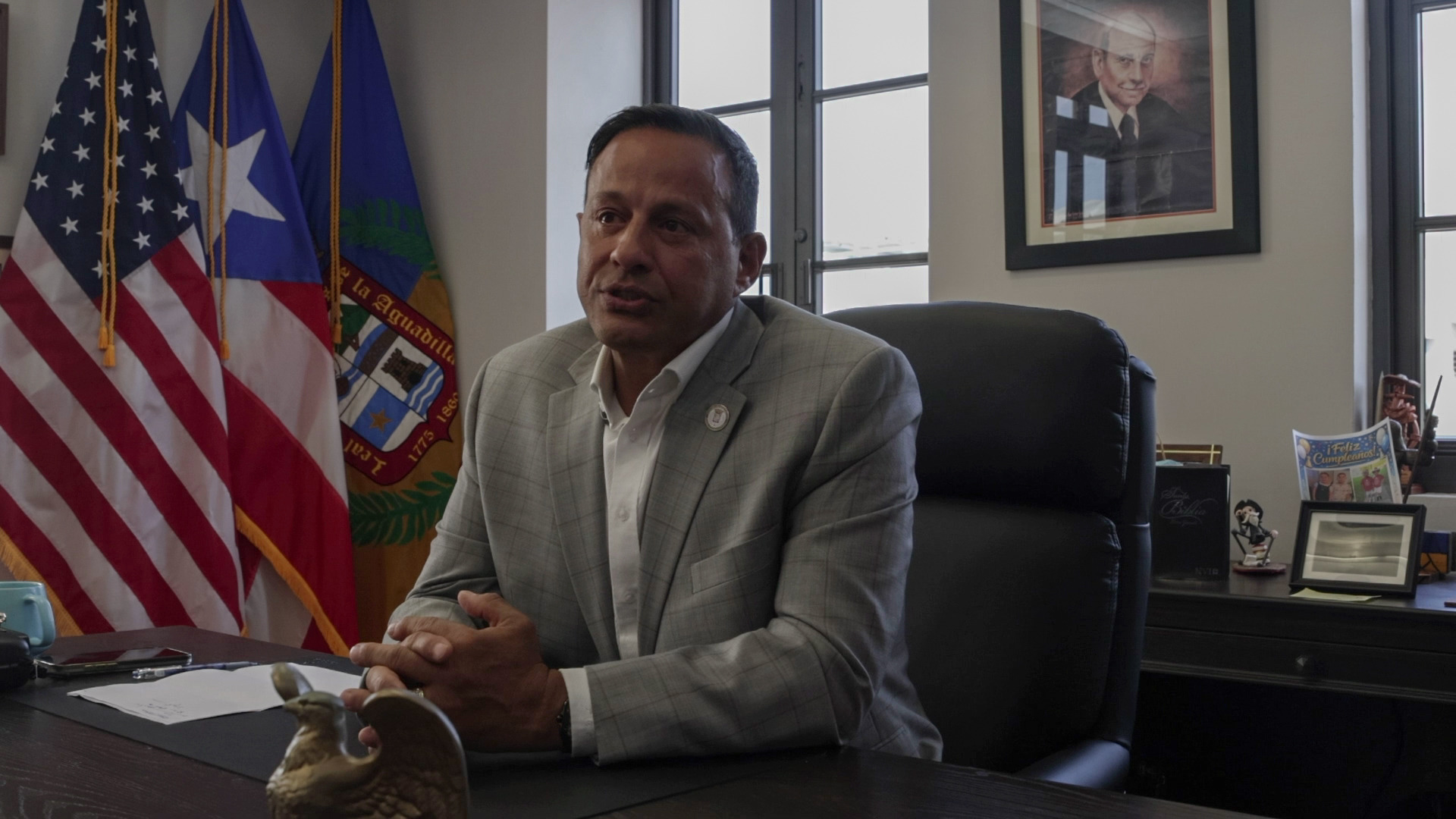
On June 26, 2025, Roldán Concepción signed Ordinance No. 82, which prohibits municipal employees from sharing information about a person’s immigration status and from cooperating with raids unless a court order is in place. Regarding the ordinance, the mayor stated in a press release that he was positioning himself “on the right side of history.” Through Ordinance No. 83, he created a task force to assist communities impacted by these same raids.
Nearly two months later, Aguadilla’s mayor received a letter from the CBP division chief for the Ramey Sector, Wilmar Rodríguez, inquiring about the city’s willingness to continue collaborating with Operation Stonegarden. “The recent designation of Aguadilla as a Sanctuary City has raised concerns regarding your department's ability to continue supporting the Border Patrol mission,” reads the letter signed by Rodríguez, which 9 Millones obtained through a public records request to the municipality.
While civil rights groups celebrated the sanctuary city declaration, DSP Secretary Arthur Garffer notified Roldán Concepción that this move was “incompatible” with the Stonegarden program. The DSP administers Stonegarden funds for the 13 municipalities and two government agencies that receive them. The agency never published a statement explaining the legal framework Garffer relied on to attempt to withdraw the funds, nor did the DSP respond to a request for comment from this publication.
Roldán Concepción revealed, in a post from September 2025, that these funds “were never withdrawn.” In the letter revised by 9 Millones, the mayor replied to CBP that the municipality is “fully committed” to collaborating with Border Patrol through Stonegarden and that “this in no way conflicts with the public policy” established by Ordinance 82.
“Although Aguadilla has adopted an ordinance that defines us as a "Sanctuary City," this term has been misinterpreted in the public media. In our case, it refers to specific and particular provisions, different from those implemented in certain jurisdictions of some states of the union. Our ordinance does not limit or interfere with the close and necessary collaboration between our municipal agencies and the operations of the Border Patrol for border and maritime security,” reads the letter signed by Roldán Concepción.
A Term Without a Fixed Definition
There is no single legal definition that describes what makes a jurisdiction a sanctuary for immigrants; it is a catch-all term used to describe different policies created to foster trust between a government and its immigrant population, explained Annette Martínez Orabona, executive director of the American Civil Liberties Union of Puerto Rico (ACLU-PR).
“Every city, every county, every state has the authority to establish rules in accordance with its own laws and mandates. In the process of developing these sanctuary protections, it can define different types of protection,” said Martínez Orabona. These policies can range from prohibiting information being shared to barring public contracts with detention centers.

Since there is no single definition of what constitutes a sanctuary jurisdiction, an exhaustive list of them does not exist. However, in a move that many civil rights groups viewed as intimidation, the U.S. Department of Justice published a list of 400 jurisdictions considered as sanctuaries. The document alleged that these jurisdictions did not comply with federal law, a claim that has been completely rejected by organizations such as the American Immigration Council (AIC). According to the AIC, states are fully within their legal authority to enact policies of non-cooperation with immigration authorities. Shortly thereafter, the Department of Justice published another list, removing the accusatory language and reducing the number of jurisdictions to just over 30.
In Puerto Rico, there are only two sanctuary jurisdictions: Hormigueros and Aguadilla. Hormigueros became the first after signing Ordinance No. 33 on June 12, 2025, which prohibits municipal employees from collaborating with immigration agencies or sharing confidential information with them.
Aguadilla followed suit. Other municipalities have expressed interest, but none have taken the step, Martínez Orabona explained.
A 2017 study found that, on average, sanctuary counties reported 35.5 fewer crimes per 10,000 people compared to non-sanctuary counties. The study—conducted by Professor Tom K. Wong of the University of California, San Diego, in collaboration with the National Immigration Law Center and the Center for American Progress—also found that the median annual household income is $4,353 higher; the median poverty rate is 2.3% lower; and the median unemployment rate is 1.1% lower in sanctuary counties when compared to non-sanctuary ones.
How Stonegarden funds work
Operation Stonegarden (OPSG) is a federal program administered by the Federal Emergency Management Agency (FEMA) that provides funding so law enforcement agencies can “support joint efforts to ensure the security of U.S. borders.” Stonegarden funds can be used to pay for overtime, equipment and vehicles, with the understanding that the funded agency will patrol the U.S. border a certain number of times per year.
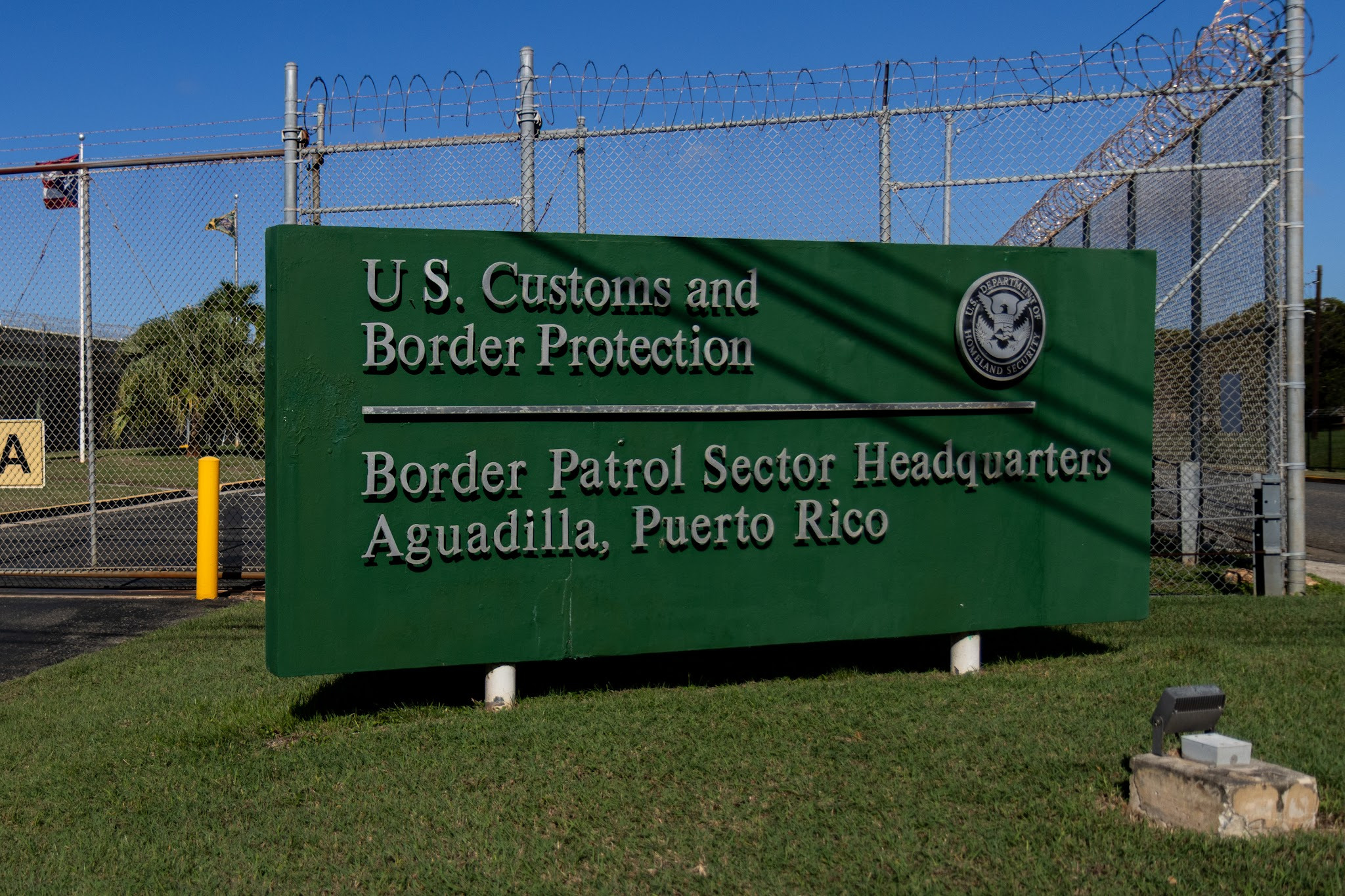
Aguadilla has participated in the Stonegarden program since 2009, as one of the first three municipalities in Puerto Rico to receive these funds. In total, Aguadilla has received at least $1.2 million in OPSG funds since 2014, according to the contracts. The most recent one was signed in 2025, for $97,500.
In the last two years, 13 municipalities, the Puerto Rico Police, and the Department of Natural Resources (DRNA) received OPSG funds.
In Aguadilla, these funds paid for municipal police overtime, as well as equipment such as patrol cars, jet skis, and all-terrain vehicles, according to the director of the Aguadilla Department of Security, Wilfred Torres Rosado. A video posted on Facebook shows the mayor handing a patrol car to a municipal officer using OPSG funds.
“[If] a boat arrives, we intervene because it’s happening in the moment. It’s not the same to see an undocumented person arriving in a small boat entering the city as it is to walk up to someone—perhaps because of the color of their skin or their language—and say, ‘Show me your papers; let’s see if you’re here legally or not.’ No, that’s not allowed,” said Roldán Concepción. The only exception to this is when there is an operation backed by a court order, he added.
An excerpt from the Operation Order FY2024, the document that explains the purpose of this cooperation, states that CBP seeks the support of the Aguadilla municipal police to “make up for the lack of personnel”.
“The objective is to create a force-multiplying enforcement unit to patrol suspected landing/drop off areas and the routes of egress that are being used for illegal cross-border activity. Joint “pulse” patrols with Border Patrol agents are also planned dependent on events and/or actionable intelligence. Officers are authorized to use the fund to conduct a combination of marine, air, and land-based patrols, during this operation,” the document states.
The same document explains that any information request regarding Stonegarden-related documents must be directed to the Border Patrol, a subagency of CBP. The document reiterates on multiple occasions its policy of secrecy regarding these collaborations.
Furthermore, the order explicitly warns that the Stonegarden agreement does not grant partners the authority to enforce immigration law. A 287(g) agreement with the U.S. Immigration and Customs Enforcement (ICE) is the only mechanism that would grant municipal officers the power to enforce said law. As of this publication date, there is no such agreement with any government agency in the archipelago, according to documents released by ICE.
In regards to Stonegarden, Martínez Orabona stated that “the ultimate goal of those funds is to stop potential criminal activity.” “The problem is that in Puerto Rico, it is used as a pretext to somehow involve local police in other types of actions that are not necessarily criminal investigations or aimed at prosecuting criminal activity, but rather at identifying undocumented migrants,” she said.
This problem is not unique to Puerto Rico. A journalistic investigation found that two New York counties had turned over 23 detainees to CBP for immigration-related reasons between 2023 and May 2025.
The suspicion caused by CBP collaborations has raised objections in various counties and states. Recently, the University of San Diego cut ties with the Stonegarden program. In early 2025, the police chief of an Arizona county on the border with Mexico stopped collaborating with the program because he felt he was expected to follow orders from the federal government. In fact, during Donald Trump’s first term (2017–2020), the police chief of a county in Washington called the funds provided by Stonegarden “dirty money” because he felt he was being paid to assist the Border Patrol; meanwhile, the board of supervisors in an Arizona county voted against CBP to avoid eroding community trust.
In contrast, advocates for Stonegarden collaborations argue that police should receive additional funding for their law enforcement work and reject the notion that these interventions intend to enforce immigration laws.
No arrest data by municipality
Since January 2025, ICE has detained more than 1,800 immigrants in Puerto Rico, according to Sandra Colón, spokesperson for ICE’s Homeland Security Investigations (HSI) subagency. The vast majority of these detentions—1,605—have been administrative, meaning they were for civil violations. The rest have been for criminal offenses, such as re-entering the country after being deported.
There is no official count of how many immigrants without regularized immigration status live in Puerto Rico. Of the more than 87,000 immigrants residing in Puerto Rico, only 687 live in Aguadilla, according to census data. This figure may include naturalized citizens, legal permanent residents, foreign students, and immigrants without regularized immigration status. Most of these immigrants in Aguadilla come from the Dominican Republic and Cuba, according to the Census.
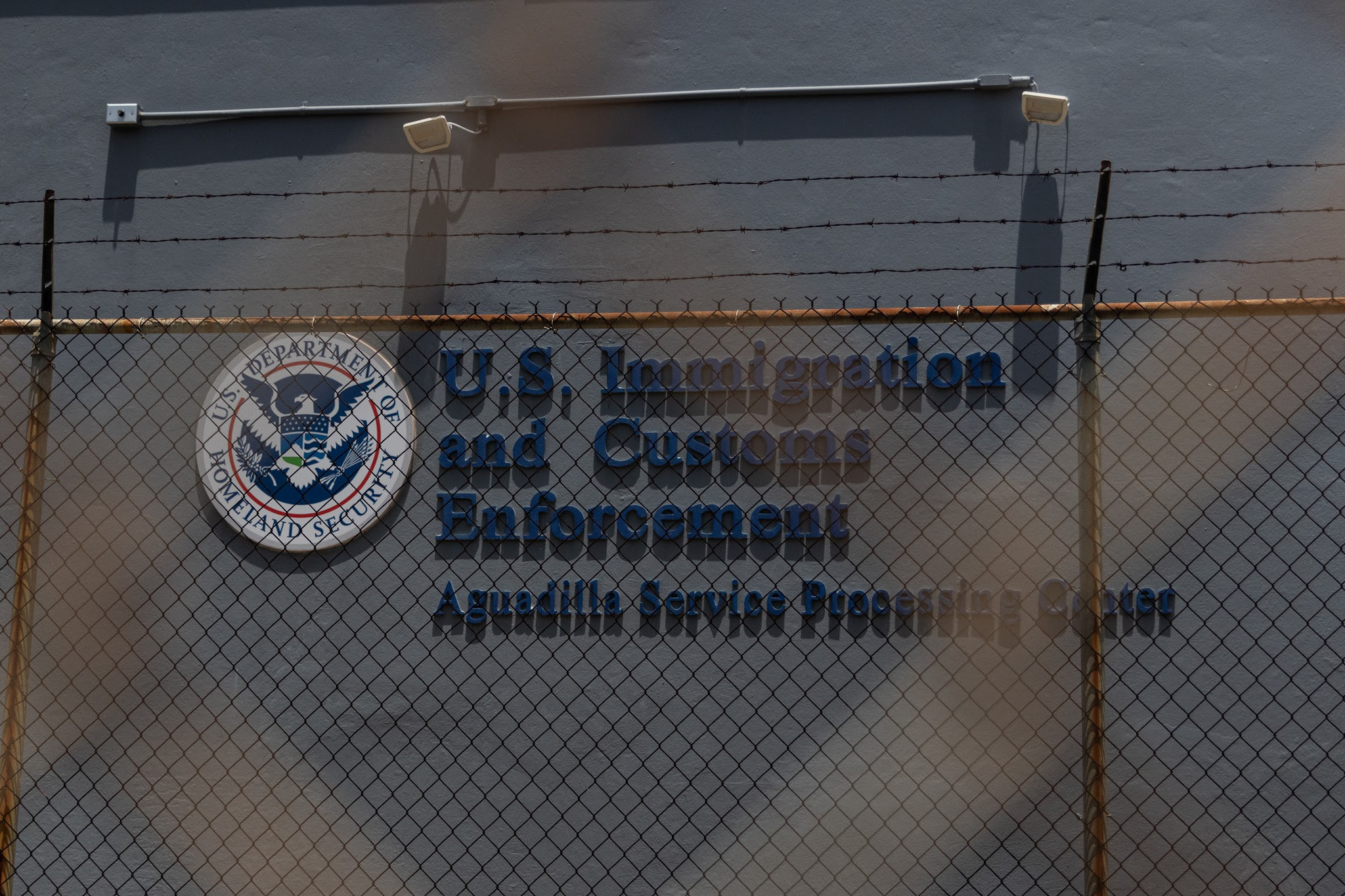
Colón explained that there is no breakdown of detentions by municipality. Roldan Concepción also said he did not know how many immigrants had been detained in Aguadilla, but he understood that the number was small. He stated that they have “completely” rejected all requests from CBP and ICE to participate in immigration raids. When they received such a request, he acted quickly and signed Ordinance No. 82, he recalled.
When asked how the sanctuary city declaration has affected operations, Colón did not offer direct comments, but she did say that “efforts in Aguadilla and the western part of the island, as well as throughout the entire island, remain on track.”
Meanwhile, CBP has detained 1,044 people without permanent residency status in Puerto Rico since 2025, according to data provided by the agency. In terms of drugs, they have seized 14.2 pounds during that same period.
CBP communications officer Jeffrey Quiñones said they were able to clarify roles, responsibilities, and communication protocols with the Municipality of Aguadilla following its designation as a sanctuary city. “CBP’s coordination with Aguadilla through Stonegarden remains focused on activities related to border security and public safety coordination, in accordance with approved operational plans and applicable legislation,” said Quiñones.
Carlos Berríos Polanco is a freelance journalist who focuses on environmental issues, immigration, and security.
Laura M. Quintero contributed to the editing.