.jpg)
[OPINION] Let’s Be a Home, Not a Prison, for the Caribbean
The authors of this column question who will protect the rights of children whose parents have been affected by ICE raids
“They’re rounding people up in Buen Consejo.” “They’re saying in a chat that ICE is in Puerto Nuevo.” “They took some workers from a community in Río Piedras; they arrested the neighbor, and the family doesn’t know where he is.” “Félix, the father of the girls who are dancers, was deported and is now in the Dominican Republic.” “We haven’t heard from Juan or Minerva in a while. Are they okay?” “Where are the boys and girls who used to always be out on the street and we don’t see them anymore?”
Messages like these are seen every week on WhatsApp, on social media, in everyday conversations. For sixteen months now, immigrants and their support communities have been dealing with the anxiety and fear caused by the violence of the secret police-like force that ICE has become. Its agents arrive masked, often already armed with personal information on those to be arrested; they use force, load them into vehicles that are sometimes unmarked, and take them away without saying exactly where they’re going. Many end up at the infamous “Neverita” in Guaynabo, a federal facility operated by the General Services Administration (GSA); at detention centers in ICE or CBP offices; or at other temporary detention centers in Puerto Rico that have not been identified by ICE. That is why, through the “Migrar es un derecho” campaign, we have denounced the existence of clandestine detention centers in Puerto Rico—something that is unacceptable in a country that prides itself on being a democratic society.
These mass arrests—which are generally arbitrary and based on racial prejudice and social exclusion—create danger, suffering, and instability. One of the most extreme consequences is the enormous number of broken families, which has had a particularly severe impact on children’s rights and protections. According to the Brookings Institute, around 400,000 people have been detained by immigration agents since Donald Trump returned to the presidency, as of April 9, 2026. The federal government does not release data on how many family separations these policies have caused. Brookings, however, made an estimate using Census data to calculate the number of children under the care of detained individuals. According to the Institute, approximately 205,000 children have had a parent detained. Of those, about 145,000 are children with U.S. citizenship.
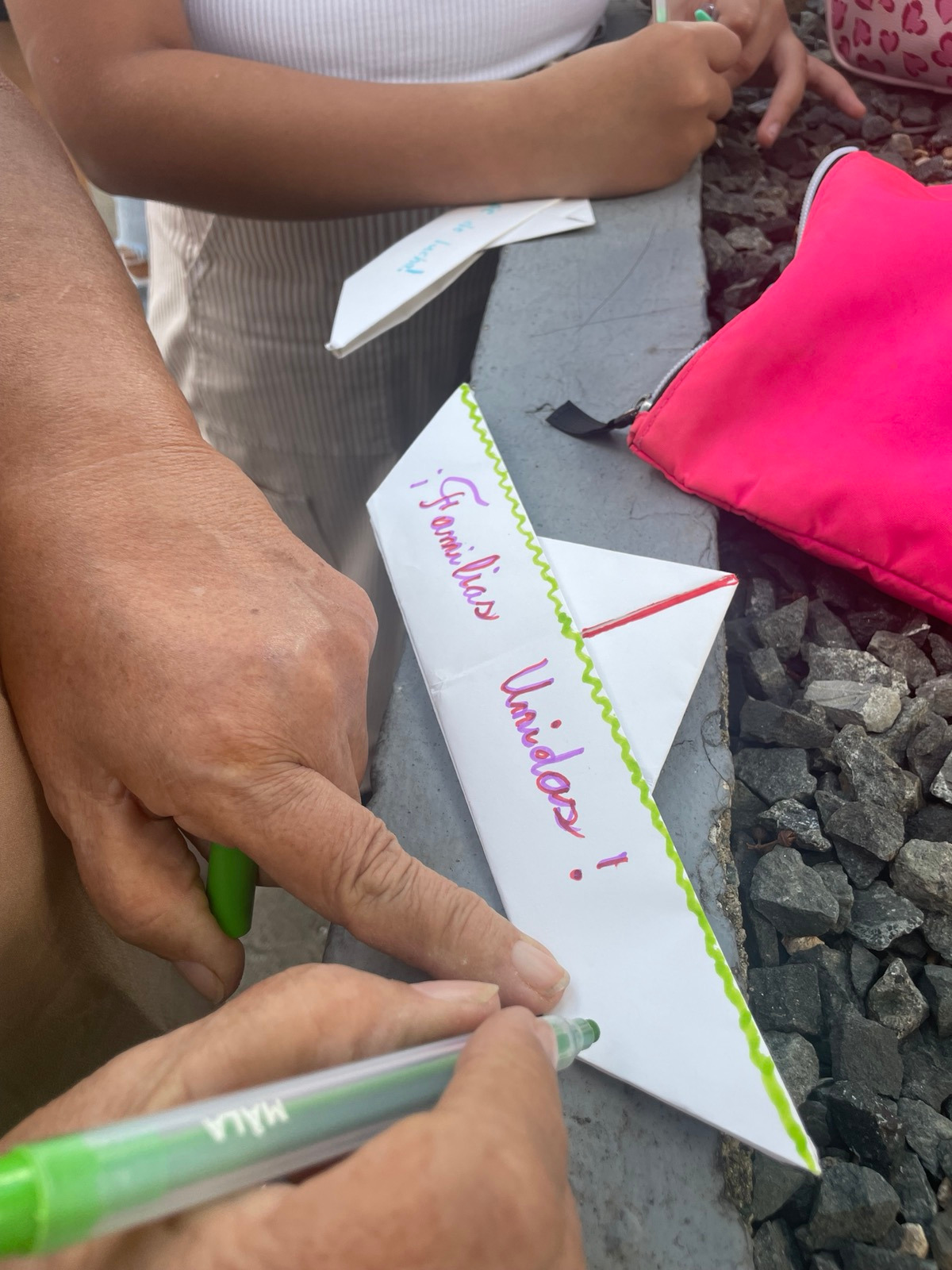
According to ICE data obtained by the Deportation Data Project, between January 20, 2025, and March 10, 2026, this federal agency deported at least 13,816 individuals under the age of 18. Of these, nearly 1 in 5 children and adolescents were not sent to their country of origin, but to a “third country.”
Now, families are being separated in ways that are more covert and difficult to track. According to the consensus among activist and community groups in the United States and Puerto Rico, in recent months, federal immigration agencies have shifted their strategy to be less visible, avoid rapid solidarity responses, and minimize community documentation of what is happening. Today’s strategy relies more on surveillance techniques, data sharing between agencies, agreements allowing state and local police in the United States to act as immigration agents (287(g) agreements), as well as arrests in courthouses and traffic stops involving state and municipal police, in the case of Puerto Rico, where there are no 287(g) agreements. Children are equally left vulnerable.
Alberto and Marina’s daughters represent the story of thousands of migrants and their daughters
Take, for example, the two-year-old daughter of Alberto Pierre—a Haitian living in Puerto Rico who was arrested while taking his wife, Marina, to a prenatal care appointment—who has not seen her father since he was arrested on Christmas Day 2025. The girl also lost the only person who provided financial support for her to live. Her mother, Marina, gave birth to her third child in April 2026 while Alberto was detained in subhuman conditions, first at Alligator Alcatraz, then at another prison in Florida. If Alberto were deported, it would be to Haiti, where the lack of security is extreme and there have been reports of a pattern of murdering returnees. “What I feel is sadness, worry. He didn’t want to go back to his country, because he’s in danger there,” Marina confirmed.
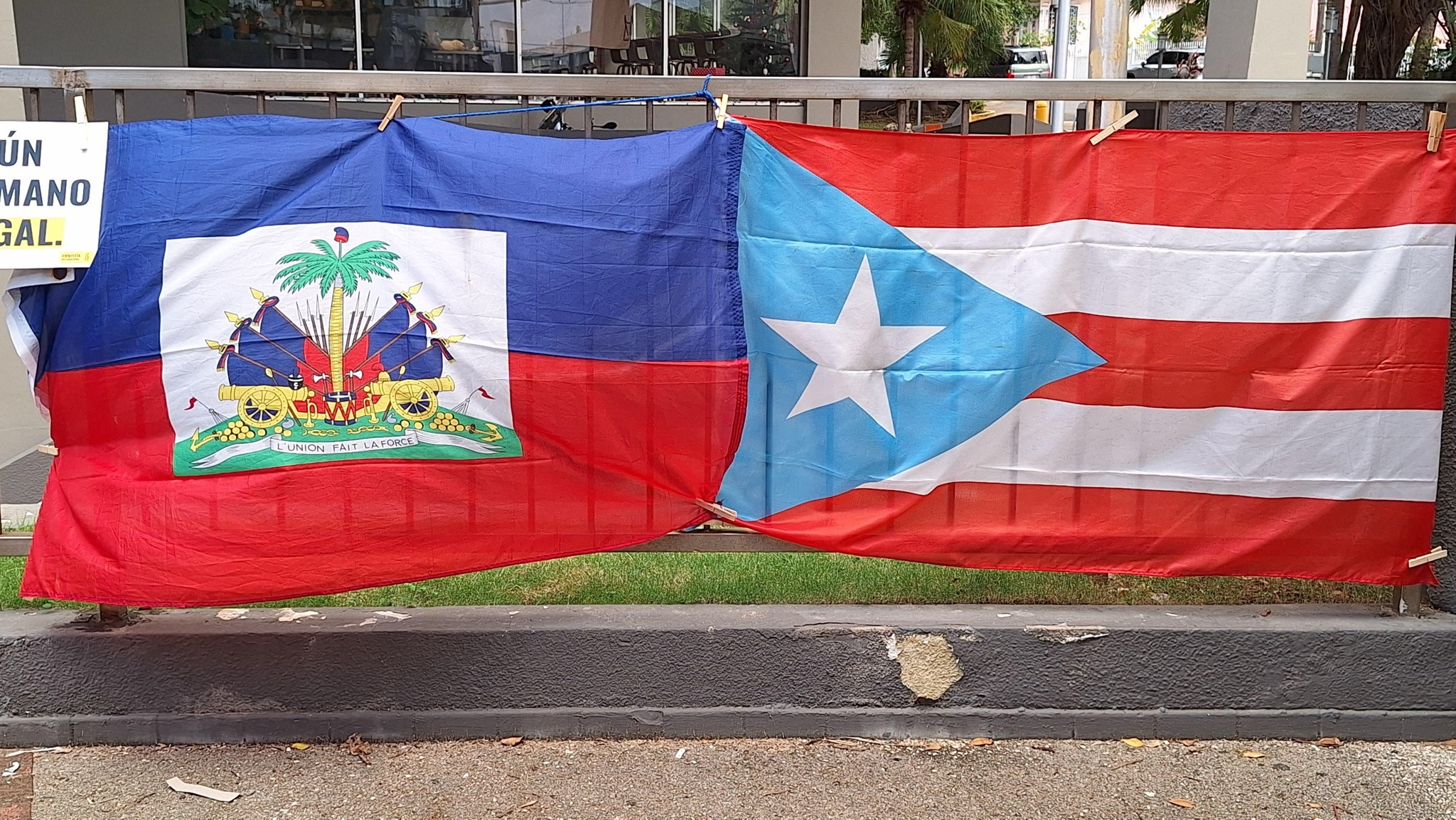
Who is responsible for attending to the needs and trauma of Alberto’s daughters and wife? Who guarantees the girls’ rights to not be displaced from their country and community; to not suffer violence? Who will bring their father back to them?
The U.S. is violating the rights of migrant children and adolescents as established by UNICEF
Independent experts from the United Nations (UN) have denounced that the United States is directly and indirectly violating the rights of migrant children and adolescents established by UNICEF. On February 18, 2025, the U.S. Department of the Interior eliminated nonprofit services that provided legal representation to unaccompanied migrant children.
Many of the 26,000 children affected have lost their legal counsel and remain at risk of forced deportation, which constitutes a violation of children’s human rights, according to Special Rapporteurs Siobhán Mullally, Gehad Madi, and Margaret Satterthwaite, experts on human trafficking, particularly of women and children; the human rights of migrants; and the independence of judges and lawyers, respectively.
“Reports indicate that young migrants are being held in windowless cells, denied adequate medical care, and separated from their parents or caregivers for long periods,” explains the UN statement.
ICE’s discriminatory raids and the Trump administration’s immigration policy place minors in situations of extreme vulnerability, lack of protection, and trauma. A report by The Washington Post documented the case of Orlin Hernández Reyes, a two-year-old boy whose mother was detained by ICE, and was later placed in the care of another person while she awaited deportation to Honduras at a detention center. The case ended in a tragedy that claimed the child’s life and illustrates how decisions made by the immigration system can irreversibly alter the lives of children who depend on their mothers, fathers, or primary caregivers.
Instead of acknowledging the impact of a public policy that leaves immigrant children exposed to avoidable risks, ICE officials publicly blamed the child’s mother for what happened; she was detained and deported. This is a narrative designed to divert attention from the core problem of a system that fails to consider the well-being of the children left behind.
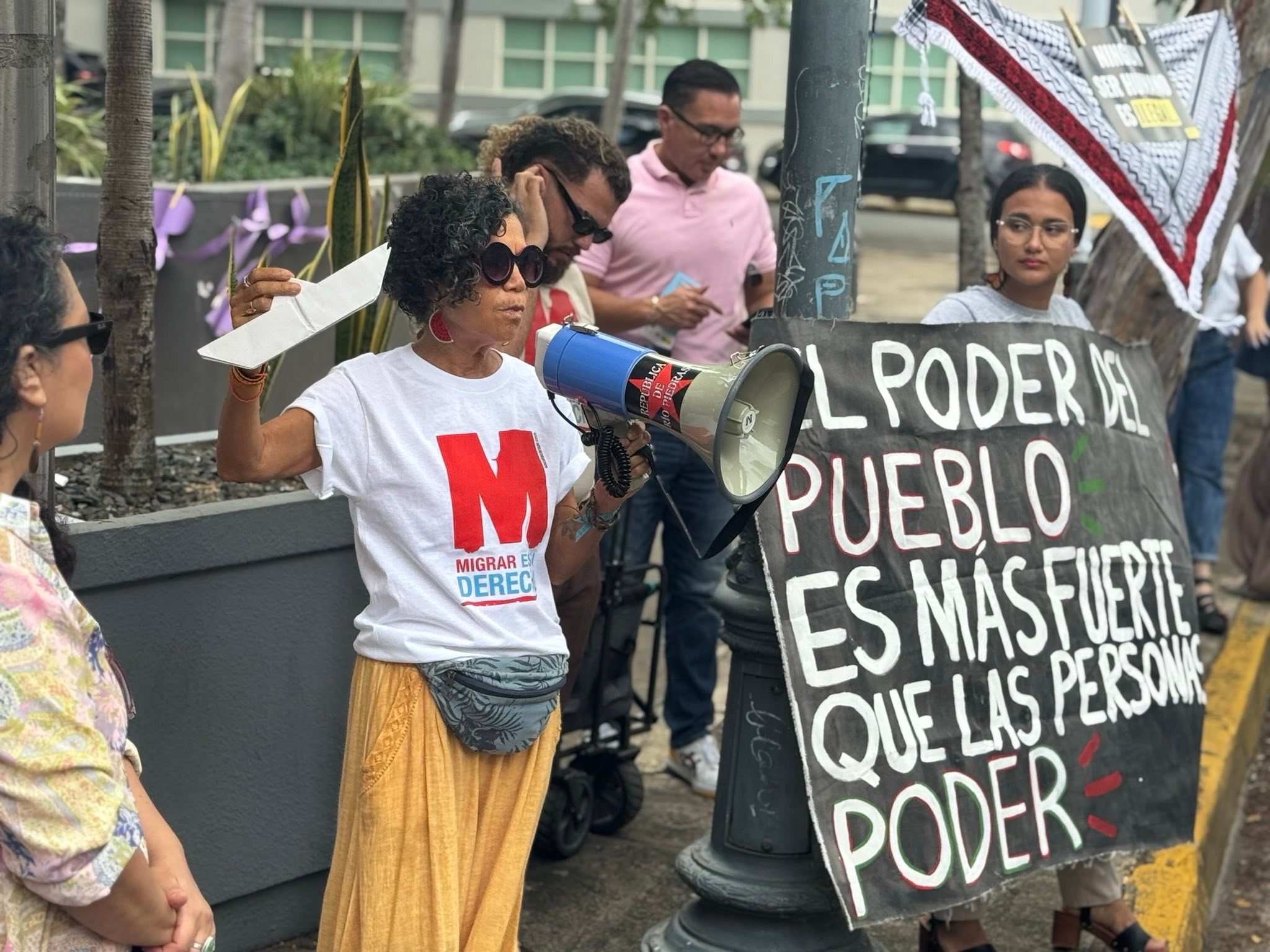
There are thousands of children in the same situation as Marina and Alberto’s daughters, or whose well-being is at risk as a result of ICE’s abusive policies, as was the case with Orlin. That is why, through the “Migrating is a Right” campaign, launched by four Puerto Rican organizations, we insist on telling our people: we must continue to resist, to speak out, to stand in solidarity, and to redouble our efforts so that these violent state practices do not become the new normal. This is an effort to raise awareness and promote the defense against violations against migrants occurring in our archipelago, which should be a home—not a prison—for the Caribbean region. But we need more efforts. In times of apathy, violence, and racism, join the fight for dignity, protection, and solidarity in Puerto Rico and the Caribbean. Stand up, Puerto Rico.
Mari Mari Narváez is the founder and executive director of Kilómetro 0. Hilda Guerrero is a co-founder of the organization Comuna Caribe.
The “Migrating Is a Right” campaign is a collaboration between Kilómetro 0, Amnesty International Puerto Rico, Comuna Caribe, and the American Civil Liberties Union (ACLU) of Puerto Rico, in response to the alarming increase in human rights violations resulting from federal raids in the archipelago since January 2025, which have led to approximately 1,900 arrests in Puerto Rico.