This initiative has been promoting a culture of peace in Puerto Rico for 30 years
For nearly three decades, a program at the University of Puerto Rico has been promoting peace amid rising violence in the country
In Puerto Rico, there are no constant bombings, no sirens warning of danger, and no urgent need to seek shelter, which is the case in other countries. However, on any given day, the U.S. The Army occupies military facilities across the archipelago. Federal immigration agents are stationed at the country’s main airport, or they conduct immigration raids in communities where many families live in fear. Official homicide figures also show that gun violence persists.
“Peace is much more than the absence of war,” says Anita Yudkin Suliveres, who has spent nearly 30 years fostering a culture of peace in a nation where 90% of homicides are committed with firearms, according to the Institute of Statistics of Puerto Rico.

The data is alarming, but it does not deter Yudkin Suliveres from her work. “We can’t just throw in the towel and give up,” says the professor, for whom peace offers “the possibility of building a different way of understanding our environment and relating to it.”
In the hallways, lecture halls, and classrooms of the University of Puerto Rico (UPR), a group of faculty and students are working toward that possibility. Although this work may not have changed the country’s overall direction, a glimmer of hope shines through. “The courses, workshops, and conferences have an impact on the work of many teachers and social workers. Now they have tools to do their work, ones that they didn’t have before,” she points out, convinced that thousands of people have benefited from an initiative that originated at the university’s Río Piedras campus.
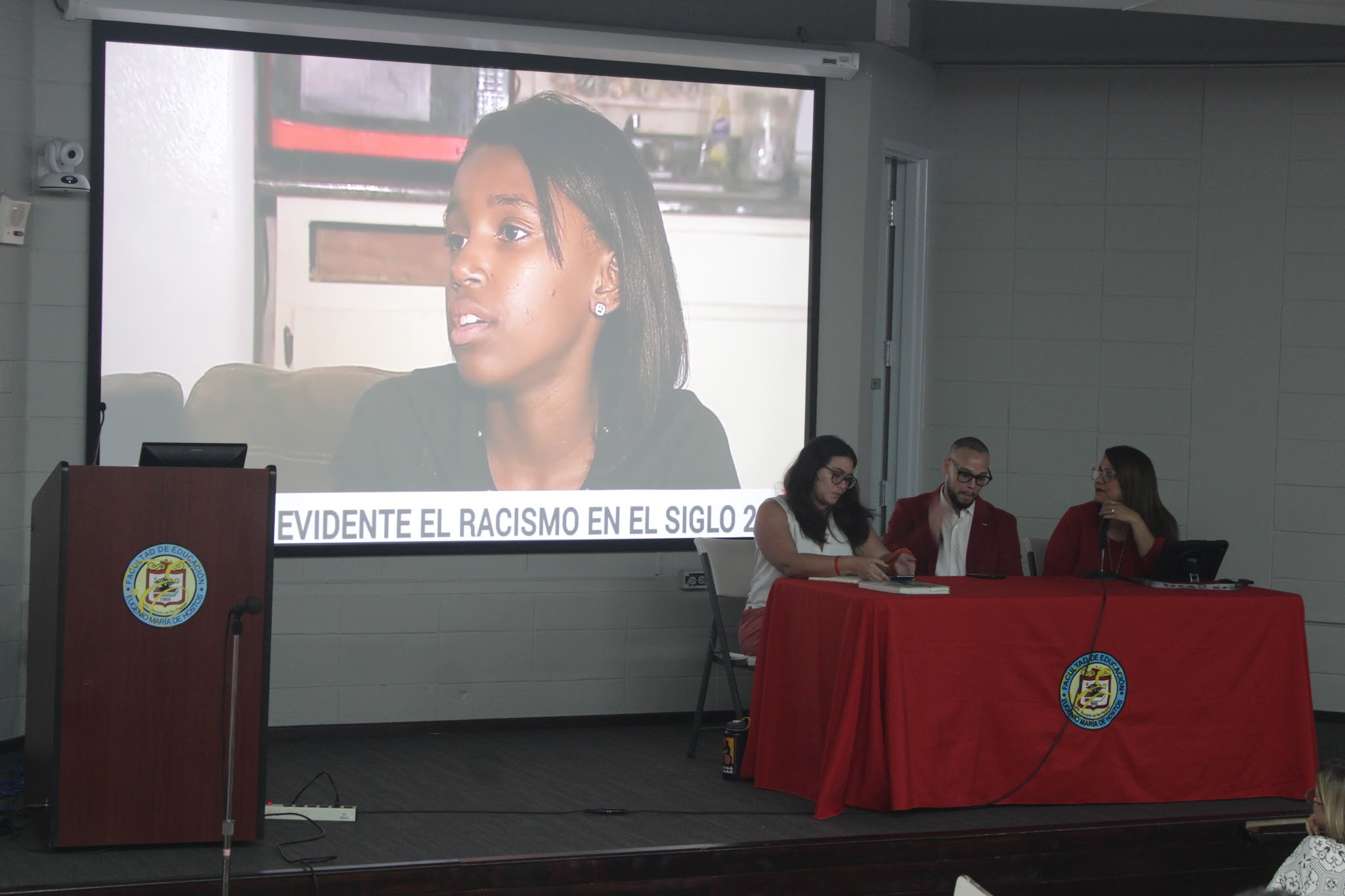
Yudkin Suliveres coordinates the UNESCO Chair for Peace Education, an academic project that seeks to reflect on cultures of peace and human rights, both on the archipelago and in the international context. In the courses, workshops, research, talks, and collaborations that have been developed, global conflicts are discussed, but the debate always prioritizes the local context. For Yudkin Suliveres, this perspective involves “Puerto Ricanizing peace,” that is, understanding it through the specific forms of violence, exclusion, and inequality that the archipelago faces.
Mobilizing for Peace
Puerto Rico has its own history of victories in favor of peace.
As a U.S. territory, it has been used by the U.S. Navy for military exercises since the early 1900s. For example, the Navy occupied two-thirds of Vieques in the 1970s. But in 1999, the murder of Vieques resident David Sanes Rodríguez sparked massive demonstrations that culminated in the end of Navy bombing in Vieques starting on May 1, 2003.
The peace Program played an active role in that fight. Its work toward building a culture of peace included the creation of comics, organizing conferences, and the exhibition of drawings by Vieques children, through which they expressed how they felt about the Navy’s presence, said Lourdes Torres Santos, who worked with the program while pursuing her master’s degree in Special and Differentiated Education at the UPR in 2011.
“That basically became a traveling exhibition; those drawings were taken to various places… and the UNESCO Program served as a link to establish processes of advocacy, organization, and support in favor of Vieques,” the educator recalled.
Torres Santos describes the advocacy work in Vieques as the origin of projects such as “Good Practices of Cultures of Peace,” a website page that highlights practices developed by educators in Puerto Rico to promote peaceful coexistence.
Since 2010, the Peace Program has published 47 best practices, ranging from lesson plans designed to address bullying and theatrical performances about violence, to creative writing workshops on community action and the creation of spaces for peaceful conflict resolution. This year, 17 additional best practices will be published. According to the website, these are “alternative ways of educating for hope and peace toward a world of greater justice and equity.”
The challenges for peace
Even though good practices are being documented, peace is taught amid turmoil. Recent years have been marked by international conflicts, such as the genocide of palestinians in Gaza, the war between Russia and Ukraine, the war between the United States and Israel with Iran, and the U.S. intervention in Venezuela. In Puerto Rico, human rights organizations have denounced the U.S. Army’s reactivation of military bases in the archipelago, as well as the increase in immigration raids, driven by the antimigration policies of U.S. President Donald Trump.
Both the return of the military to the country’s bases and the immigration raids were labeled by Professor Yudkin Suliveres as a “militarization of public and private space” and a persistent belief that “everything is resolved through military means, through power, or through weapons.”
From prisons to university classrooms
The history of the UNESCO Chair for Peace Education Program in Puerto Rico formally began in 1997, when the then-director-general of UNESCO, Federico Mayor Zaragoza, asked the UPR to create an academic space dedicated to reflecting on cultures of peace.
In those years, professor, historian, and Jesuit priest Fernando Picó visited the country’s prisons and taught classes to inmates, despite knowing that many would never regain their freedom. As the initiative’s first keynote lecture at the UPR, the Peace Program took on Picó’s work, a project that continues to this day.

These initiatives in Puerto Rico’s prisons have allowed incarcerated people to pursue college courses and earn academic degrees.
“It was a project of possibility—of addressing the problem of violence or of people who had at some point committed acts of violence,” says Yudkin Suliveres about the project that began with the professor volunteering in prisons and which, now with greater support, allows inmates to attend university in person.
For the professor, these efforts demonstrate that working for peace is not limited to stopping wars. It also involves opening up opportunities for those who have experienced or perpetrated violence. “It is an example of how many forms of violence, exclusion, discrimination, and lack of participation exist in Puerto Rico, which require building a different way of life in this country,” she says.
An Initiative in Times of Crisis
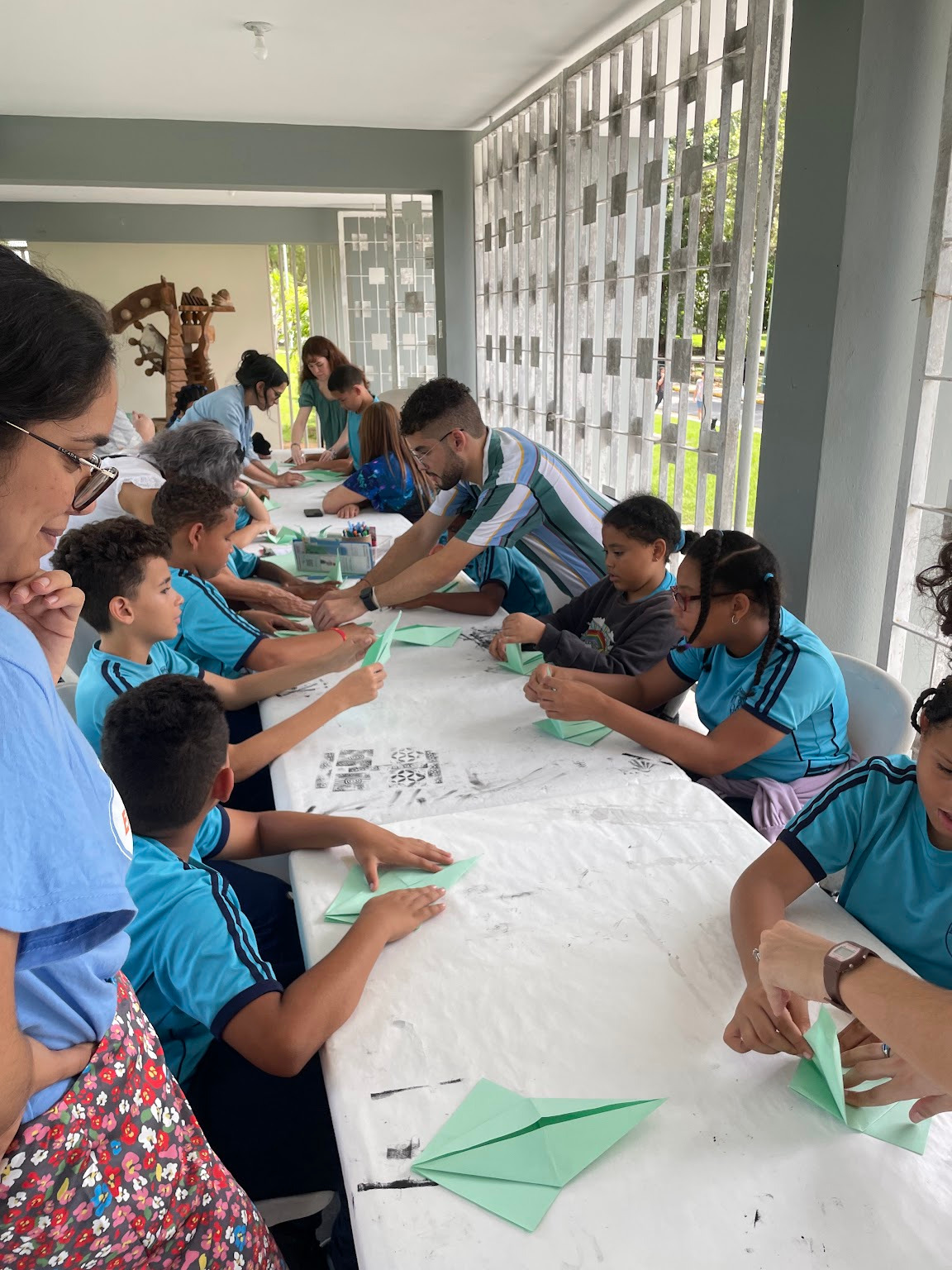
To date, the UNESCO Chair for Peace Education Program has published 17 keynote lectures and two anthologies, and nearly 1,500 people have participated in its annual “Tallereando por la Paz” event. Additionally, approximately 200 students have taken one of the peace-related courses offered by the university’s College of Education.
However, sustaining this work is not always easy.
The UPR is undergoing a fiscal crisis that, over the years, has reduced staff, budget, and academic infrastructure. Even though the Peace Program managed to extend its formal agreement with UNESCO through 2029, resources remain limited. Publishing research or maintaining educational projects can take longer than it did when resources were more abundant. “What used to take us a year now sometimes takes two,” says Yudkin Suliveres.
Even so, the project persists. “It is an extremely courageous endeavor… uphill, going against the grain… and it has endured and withstood all the administrative challenges at the university,” affirms Torres Santos, who hopes for a larger budget for this project, which focuses not only on teaching peace but also on putting it into practice.
During her time spent with the Peace Program, Torres Santos observed firsthand that the lack of funding posed an obstacle for the project.
Even so, she said that, as a result of the program, her work as an educator can no longer be separated from human rights. In fact, she always remembers a phrase she learned during her years working with the initiative and which she now passes on to her students: “Peace is the right that brings everything together… you can’t achieve peace if the rest of your rights aren’t guaranteed.”
Torres Santos believes that, given the current situation in the country, pursuing peace requires taking a stand and taking action. “Peace is not neutral.” That is why, whenever she can, she attends the program’s activities.
But often, the work is exhausting. Over the years, Yudkin has carried it out alongside other professors who are overburdened. “We all have our full-time responsibilities at the institution, in addition to the activities we do… I see the work other institutions do and I’m surprised,” she says
Yudkin Suliveres has seen that, in parts of the world where other programs exist, online and in-person courses are also offered, and more research is conducted, but she also knows that the universities that achieve this have more technical support, funding, and administrative staff. That is why it is more difficult to sustain the project at the UPR.
Even so, the professor believes that the work cannot stop. She recalls that, when requesting information or resources on human rights from libraries in Puerto Rico, the response she often receives is: “What we have is what you’ve sent us.” That is why she feels the need for the work to continue.
“We keep moving forward, not because we think we’ve managed to change the world, but we keep trying because without education there isn’t even the possibility of understanding one another, or of considering other possibilities,” Yudkin Suliveres affirms.
In an archipelago where violence frequently makes headlines, the hope of this professor and the Peace Program lies in fostering a culture of peace, one that seeks to permeate the everyday life of Puerto Rico.
Génesis Dávila is a journalist specializing in human rights and Latinx communities.