Flor Joglar de Gracia: “Raising children is definitely a nation-building project”
The mother of five artists—three of whom are internationally renowned—shares how music and activism were an integral part of raising her children
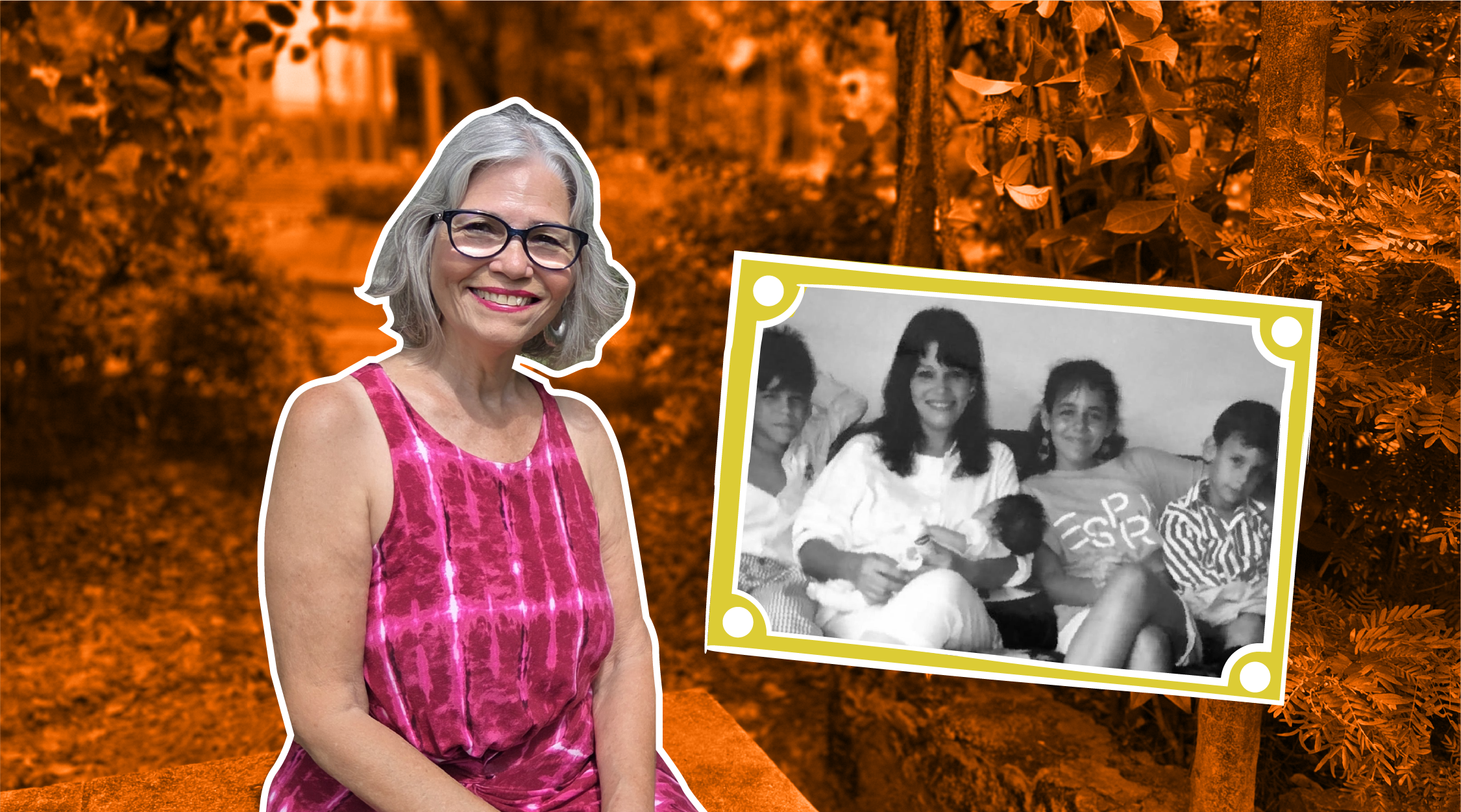
Flor Joglar de Gracia walks at a leisurely pace. She crosses Constitución Avenue in her long poppy-pink dress. I wave to her. She sees me and greets me with a broad smile. Although she prefers to go unnoticed, today she lives up to her name, like a burst of color amid the grayish, dull tones of Luis Muñoz Rivera Park in Old San Juan. The radiance she exudes on this May morning is also reflected in the lives of her five children: Milena, René, Eduardo, Gabriel, and Ileana—three of whom achieved worldwide fame as members of the group Calle 13 and later as solo artists.
“I wanted to be the mom I always dreamed of. Along the way, I made mistakes… but all the love I could give them, I gave them,” said Joglar de Gracia, sitting on a wooden bench in front of a purple jalapa bush that matches her dress.
The mother of five artists shared—in an exclusive interview with 9 Millones—how music, the arts, and activism were part of the upbringing she provided, to the point of helping to shape people who deeply love their homeland—Puerto Rico—and seek its well-being.
“Fame was never the path,” she admitted. “I always told them: ‘We are not in this world to live for ourselves […]. We are here to show solidarity,’” she recalled.
And time turned her wishes into reality. Ileana Cabra Joglar, her youngest daughter better known as iLe, led the International Women’s Day protests by singing “Contra todo,” a song she wrote out of anger over poor public governance and that that calls for collective power. René Pérez Joglar—known as Residente—has written countless protest songs, such as “Querido FBI”, written after the assassination of Filiberto Ojeda Ríos, and “Afilando los cuchillos,” which he released during the protests of the Summer of ’19, a series of demonstrations demanding the resignation of ex-governor Ricardo Rosselló. Milena Pérez Joglar, her eldest daughter, also composes, performs, and is pursuing a master’s degree in cultural management. Both Milena and Gabriel Cabra Joglar collaborate with iLe on creative direction. Gabriel also works as a creative with Residente. Eduardo Cabra Martínez—the son Flor didn’t give birth to, and who was known as “Visitante” in the group Calle 13, —also produces, composes, and plays various instruments.
After stepping away from performing to raise her children, Flor reflected on her life’s unexpected achievements and what she has learned from them. “I never would have imagined everything that has happened to us.”
During this Mother’s Day week, 9 Millones interviewed two mothers of artists to highlight how raising children could be both a life and a nation-building project. The responses have been copyedited for brevity and clarity.
Laura Quintero: How was music a part of your family’s life?
Flor Joglar: Music was always a part of our family and my life from a very young age… My sister and I were raised by my mom and my maternal grandparents. My mom sang, danced[…], wrote, drew, painted, composed, decorated—she did it all. I mean, I used to tell her, “Mom, you were given every talent in the world.” There was always music playing at my mom’s house… My mom, from what I’ve been told, was the kind of person who would throw herself on the floor at the University of Puerto Rico to dance like the rumberas of her time.

When [I] started theater, well, it was also through acting—with Teatro del 60. My children were exposed to the arts from a very young age. I practically gave birth to Milena right there in the theater! Then came René… Milena and René’s father was a musician; a labor lawyer, but he was also a musician. He attended the [Escuela] Libre de Música. My second husband, an advertising executive, was also a musician; he’s a musician… he still plays.
We always played all kinds of music: classical, salsa, flamenco—because I love it—tango… boleros… My ex-husband [played] lots and lots of music, all the time: in the car, at home… When we cleaned the house, as René once said, we’d put on Rubén Blades.
They were always super exposed to all kinds of music, especially music that dealt with social and political issues.
Laura: iLe has sung and recorded songs composed by your mom. Tell me what that meant to you.
Flor: My mom has written a lot of songs. Ileanita has recorded three. When we got married—my sister and I got married young: I got married at 19 and my sister was 18 when she got married—well, since she was a schoolteacher, she would go out [and] sing her songs since we weren’t home anymore. There was a club called El Tú y Yo; she would go there and sing, and they would sing her songs.
iLe recorded “Dolor,” a song written by her grandmother, alongside Cheo Feliciano.
I feel a little sad that she wasn’t able to hear Ileanita sing her songs and that she didn’t get to hear Cheo Feliciano’s recording with Ileanita singing her song “Dolor”… Wow, she would have been over the moon; so happy that it had happened. She didn’t get to see it; she saw Calle 13 and she saw Ileanita [as the group's vocalist]. She gave Ileanita lots of advice on how to sing, what to do with her voice; not to imitate anyone. She’d tell her, “You have to create your own style; be yourself,” and she’d give her little tips.
Laura: René talks, in one of his songs, about how you gave up acting to raise them; to help raise them properly. Would you say that raising your family became a life project?
Flor: Yes. I don’t know why that song makes me want to cry. It’s a description of what we went through. Like in every family, there are happy moments and really difficult moments.
René's description of his family in the song “René” moves his mother deeply.
When I joined the drama department—in that beautiful theater—I took my first acting class with Dean Zayas, and the first thing Dean said was, “You know, you’re not going to be able to make a living doing this.” I was 17 or 18 [years old]. It was my sophomore year of college, and I said to myself, “I am going to make a living from this.” And I had the opportunity to join Teatro del 60. I started with “Puerto Rico Fua.” My debut was in Venezuela, [at] a theater festival there. An actress who had played the role before in Puerto Rico dropped out, and they called me to ask if I could go to Venezuela, and I said, “Yes!” I was nervous because, imagine, that was going to be my debut. So, I thought, “I’m going to do this my whole life. I’m going to make a living from theater!”
I got married while I was in college. Milena and René’s dad was a freshman in law school. A year later, I had Milena. I’d go to class with my baby bump.
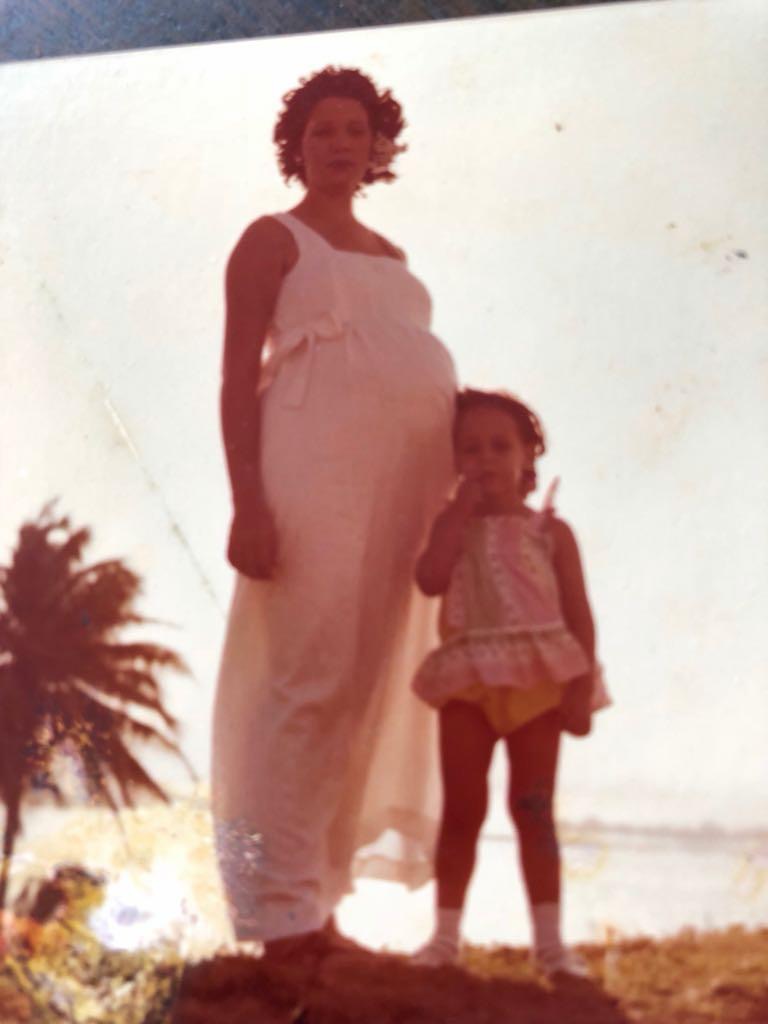
Later on, after I had graduated, René came along. I didn’t think I’d have to give it up at that point. But when my third child was born—Gabriel, from my second marriage—my life became complicated because rehearsing every day—given the state of the theater at the time, with so much, so much work—was going to be really difficult for me, since I wanted to give my children the attention they deserved.
I wanted to be the mom I’d always dreamed of being. Along the way, I made mistakes, because I’m not a perfect woman, nor am I a perfect mother. I made mistakes, but I did the best I could. I gave them all the love I could give. And so, I had to give up acting. There were people who would say to me, “Oh, but there are other people who do it.” Well, okay, I don’t know how they do it, but I know that I had to take care of my children.
Rushing off to rehearsals; before that, learning and studying a script. That’s not easy. Something was going to go wrong, and I didn’t want it to be my family. I decided to take care of my children first.
Laura: How do you look back on it now?
Flor: I don’t regret it at all. I think everything in life has a purpose and its time, and now that I look back, I say, “Wow, I never would have imagined all that happened to us.” It was a surprise.
They’ve had the chance to collaborate with all those people I admired: Joan Manuel Serrat, Mercedes Sosa, and so many others. [She also mentioned Silvio Rodríguez at another point.] Then, out of the blue, René collaborated with Rubén Blades. I never thought that would happen. René wanted to [record] at La Perla, and he followed up until it happened, and he really has a wonderful relationship with him now. We all have a wonderful relationship with him. Also, when Mercedes Sosa called him for “Canción para un Niño en la Calle,” I couldn’t believe it.
The fact that her children have recorded with artists she admired has been a pleasant surprise; “a gift from life.” In the song “La Perla,” René, Eduardo, and Ileana sang with Rubén Blades.
I [used to] watch Manuel Serrat perform—who, in fact, I met at one of the Grammys. I used to watch him, and I told him, “This is surreal. This is surreal, because I used to see you at the theater. I used to see you and listen to your songs.” And he barely let me get a word in before saying, “Your son is wonderful. Your son is a poet.” I looked at him and I [thought to myself]: “Wow. I can’t believe Joan Manuel Serrat is telling me that.” They were such magical things. [Things I] never dreamed of, never expected, never imagined, that for some reason have come to pass. They have been gifts from my life.
I always asked myself, the world, and God, above all, at that time, for them to be great for the world, but I didn’t imagine “great” thinking of fame or success. I said it thinking they should support causes; that they should do something to help others. That’s what I thought. Fame was never the path. I don’t like interviews; I like the privacy of my life. So I never imagined everything that would happen, but now I look back and say, “Well, everyone is following their own path.”
I’m like a mother hen. I’m always keeping an eye on them. They’re adults now; they do what they want, but I give my little nudge here and there. I call them, I tell them what’s going on. I give my opinion even if they don’t ask for it, but I also respect their decisions.
Laura: Based on that wisdom gained over the years, how do you raise people who love their country and strive for its well-being?
Flor: Love for one’s country is something you cultivate from the very beginning, from a young age and that was always very clear at my home. We were always aware of what was happening in the country and around the world. We discussed it and talked about it even when they were very young. We’d go to the occasional protest, too. With their dad, they also went to many demonstrations.
They’ve been aware of the importance of always fighting for what’s right and of showing solidarity. Besides that, I always told them: “We’re not in this world to live for ourselves and be selfish. We always have to be aware of what’s happening around us, of who’s suffering, and how we can help them. That’s why we’re here—to show solidarity.” I think that’s where it all comes from, and as they’ve grown up, they’ve been exposed to it on their own.
That’s really where all that love for their country comes from.
And they’re doing just that—Milena and René, who have children—with their own kids. They’re not just keeping up with what’s happening here, but also with what’s going on right now in Palestine, Sudan, and other countries; what the United States is causing. We’ve always talked about how [the United States] has intervened in other Latin American countries—and [with] us, who live in a colony, sadly—and how that affects us.
Laura: What advice would you give to those who are just starting out as parents?
Flor: I don’t feel I have the authority to give anyone advice. Life is an adventure, and how you live it is a very personal thing.
My advice is that, to have children, you have to want to have children. You have to feel it, because you could romanticize it: “Oh, it would be so lovely.” Yes, but that little baby needs to be cared for, needs to be loved, and will grow up. You have to be there all the time, and sometimes—like me—you have to give up certain things.
I’d dreamed of being a mother since I was a teenager, in a very romanticized way. Then, you’re faced with all these different personalities who don’t necessarily heed your warnings or listen to you. Everyone has their own freedom. It’s not easy, but it’s wonderful. I love being a mother. From the very first time. I gave birth to Milena, who was the first, and I said, “I want to have six more.” I was 20 years old, and the nurses were like, “What is this girl talking about?”
I didn’t have six, but with Eduardo—who I didn’t give birth to—well, [I had] my fifth. So now we have this big family that I always wanted. My children are Milena, René, Eduardo, Gabriel, and Ileanita. They are my five children. Sometimes, people ask me more about some of them, who are better known, but I am mother to all of them. Don’t leave any of them out because, to me, in my heart, they are the most important thing in my life. They are the people I truly enjoy being with all the time.

Laura: Do you think that raising children can also be a nation-building project?
Flor: Raising children is definitely a nation-building project. You’re shaping the present and future of our country, and you have to give it your all. It’s one of the hardest jobs. There are so many emotions involved in raising children. There are many things you have to unlearn and learn if you want those people to grow up to be caring, loving individuals who value their country and understand what it means to work for it.
[Raising children] is a massive undertaking. It’s not just a project; it’s a massive undertaking that lasts a lifetime.
The author is the editor-in-chief of 9 Millones and a journalist with 14 years of experience covering public policy issues and their impact on communities.