In Exile: A Dominican migrant claims to be wrongfully deported from Puerto Rico
Joel Tavares Castro was deported on the day of his daughter’s 7th birthday; his family was torn apart by Trump’s immigration policy
This story was produced with the support of Altavoz Lab, an organization dedicated to uplifting the work of community journalists.
Joel Tavarez Castro, a Dominican immigrant, was making his way back home to celebrate his daughter’s birthday after a long day of work when federal immigration agents stopped him in Santurce. Although he was nervous and scared—because he had seen agents terrorizing his neighborhood since the Trump administration came into power—he pulled out his social security papers and recently expired work permit, explaining that its replacement was being processed. He also mentioned that he only had some medical documents left to submit on his application to become a permanent resident.
Despite these explanations, he was still detained. When his wife Miosoti Figueroa Parra—a U.S. citizen—found out of his detention, she burst out of her job, following the van taking her husband. She tried to explain that Tavarez Castro was in the process of regularizing his status, but they ignored her. A few days later, he was taken away in handcuffs to a detention center in Texas, where he spent a few hungry and cold nights. “I spent two days on a plane without eating anything, only a bottle of water and a piece of bread. Two days with my hands and feet tied,” he said.
Tavarez Castro, who worked in construction, was deported with an “expedited removal order,” a process by which immigration officers can summarily remove noncitizens from the U.S. without a hearing before an immigration judge. It’s only supposed to apply to immigrants who have been in the country for less than two years, but Tavarez Castro had been living in Puerto Rico for nearly 23 years, and had been married for eight.
“The registry is full of documentation that shows he has been here for more than two years,” Rosaura González Rucci—his lawyer—said.
U.S. Immigrations and Customs Enforcement (ICE) confirmed to 9 Millones that U.S. Customs and Border Protection (CBP) arrested Tavarez Castro. CBP acknowledged our request for comment, but did not reply by publication time.
ICE added that having a work permit does not prevent anyone from being arrested or deported. The agency declined to comment on the expedited removal, while seeming to justify it by noting that, in October 2011, Tavarez Castro was convicted of fraud and misrepresentation under the Immigration and Nationality Act (INA). Judicial records show that in July 2011 he was detained by CBP at the Luis Muñoz Marín International Airport, in Carolina, Puerto Rico, when trying to board a flight to Orlando (Florida), where he showed a fake ID and a fake Social Security card under the name Jorge Román Morales.
Tavarez Castro told 9 Millones that the desperation of not finding a job in 2011 made him try to leave to the United States—“To be honest, things got really bad—you had to pay just to get a day’s work… When you have kids, you have to make do with what you have,” he said. He pleaded guilty, and complied with the sentence of probation. Afterwards, an immigration judge showed mercy, telling him that God was giving him a second chance to keep providing for his daughters, he recalled. (He had two daughters at the time).
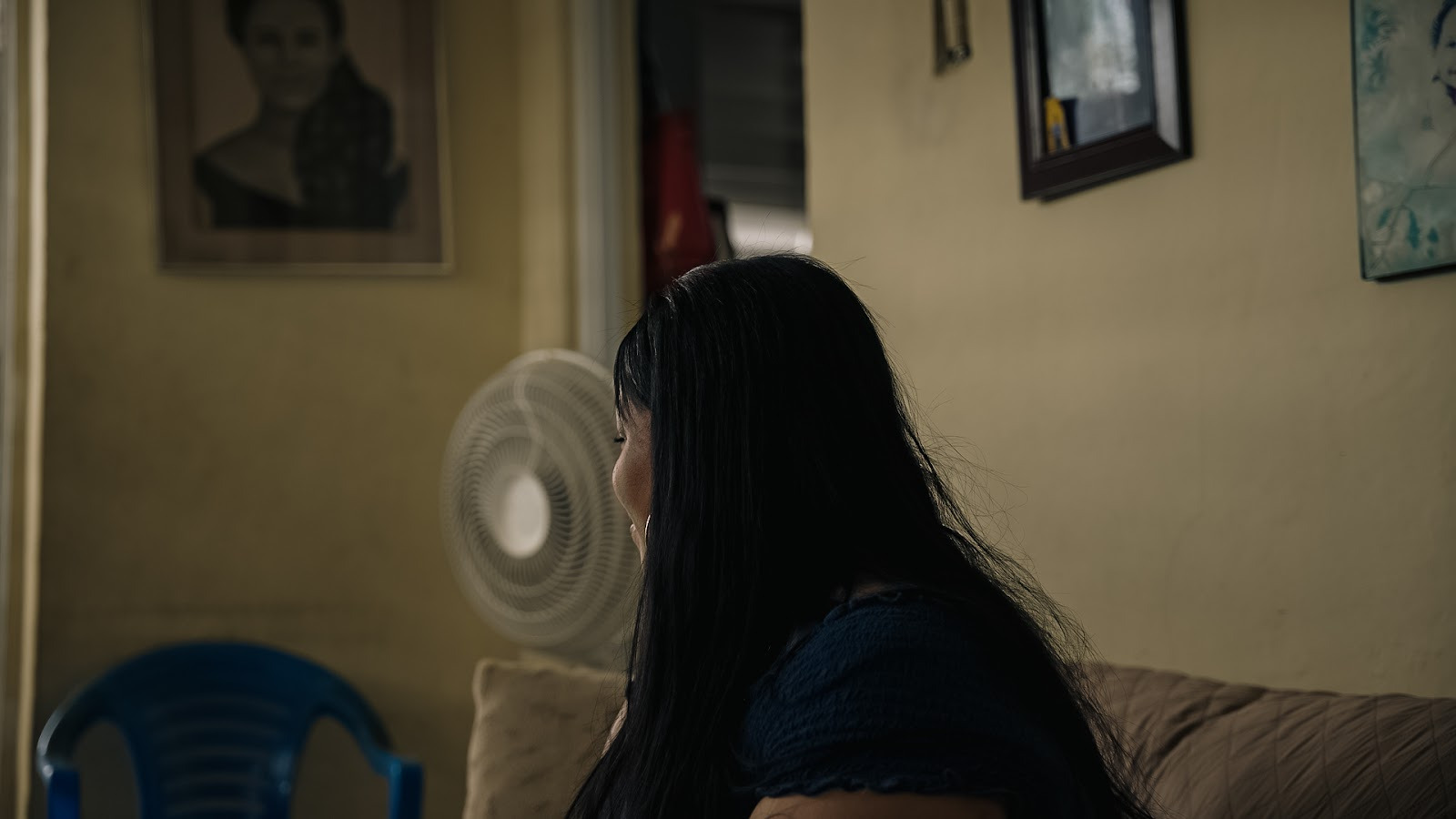
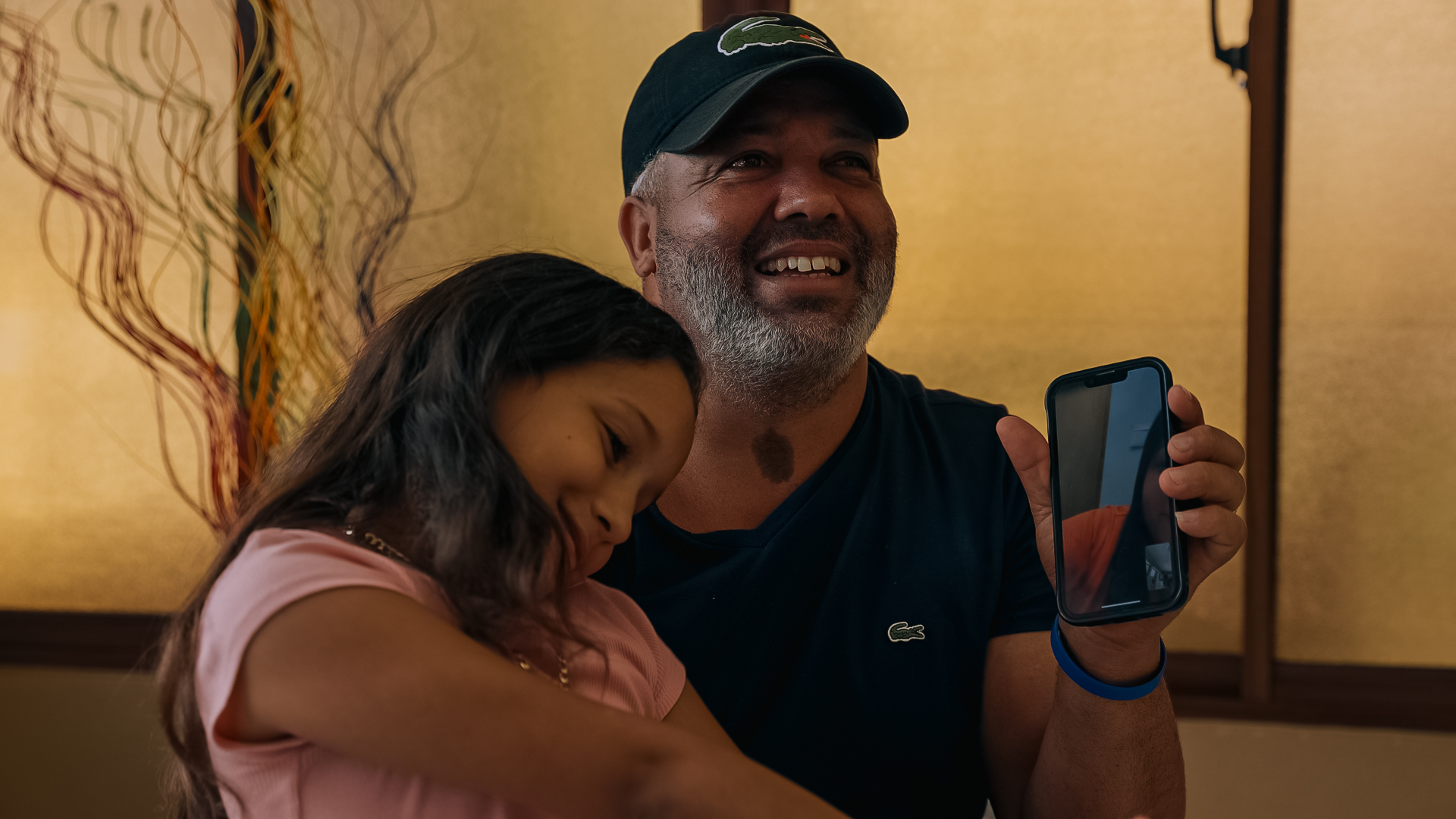
Now, Tavarez Castro is living in the small Dominican town of Villa Vásquez—in the Northwestern province of Montecristi—that he left when he was a teenager. He lives with his sister, every day hoping that he can return to the home he built in Puerto Rico. His wife, who is completely devastated, has been forced to work day and night to support their three children. Tavarez Castro has two other children that he supports.
“We are suffering as a family. My girls have never been separated from their father,” Figueroa Parra confessed in an interview at her mother’s home.
González Rucci explained that it’s unlikely Tavarez Castro can return to Puerto Rico in the next ten years, because of re-entry bars that the law imposes on immigrants who are found to have entered illegally, leave the country, and want to re-enter lawfully. His only option is to sue the U.S. Government for being, as he claims, wrongfully deported. For now, he remains in the Dominican Republic, where he recently got to see his youngest daughter for the first time in months.
“Once the person is deported, what else can you do besides to appeal the deportation sentence?”, said María Charo García Miranda, the director of the Immigration Clinic at the Legal Aid Clinic within the University of Puerto Rico’s School of Law.
García Miranda explained that since CBP is accustomed to arresting people at the border or near the border, these mistakes are common. Because of President Trump’s public policy—which is focused on increasing deportation numbers and removing people from the United States—he transferred the powers held by ICE agents to other agencies, such as CBP.
“They processed him the way they’re used to doing it, and he was processed wrongly because expedited removal is for people who have been here for less than two years,” she claimed.
Apart from allegations of being deported without due process, the process to become a permanent resident is difficult and lenghty. INA provides for the cancellation of removal and adjustment of status for nonpermanent residents who have been in the United States for a continuous period of no less than 10 years, who have also been people “of good moral character” during such period.
9 Millones spoke with Tavarez Castro, Figueroa Parra, González Rucci, and José Rodríguez—of the Dominican Committee of Human Rights—to understand how the Dominican community has been affected by the Trump administration’s deportation agenda. The result is a 10 minute short documentary, the first of a three-piece video series called Una misma tierra (A Common Land), which portrays the experiences of immigrant communities in Puerto Rico.
Journalist Laura M. Quintero contributed with editing and fact-checking. Luis Alfaro Pérez copyedited.