Three Laws Restricting Reproductive Health in Puerto Rico
In the span of just four months, the ruling political party have passed three measures that anti-abortion activists may use to restrict or criminalize abortion
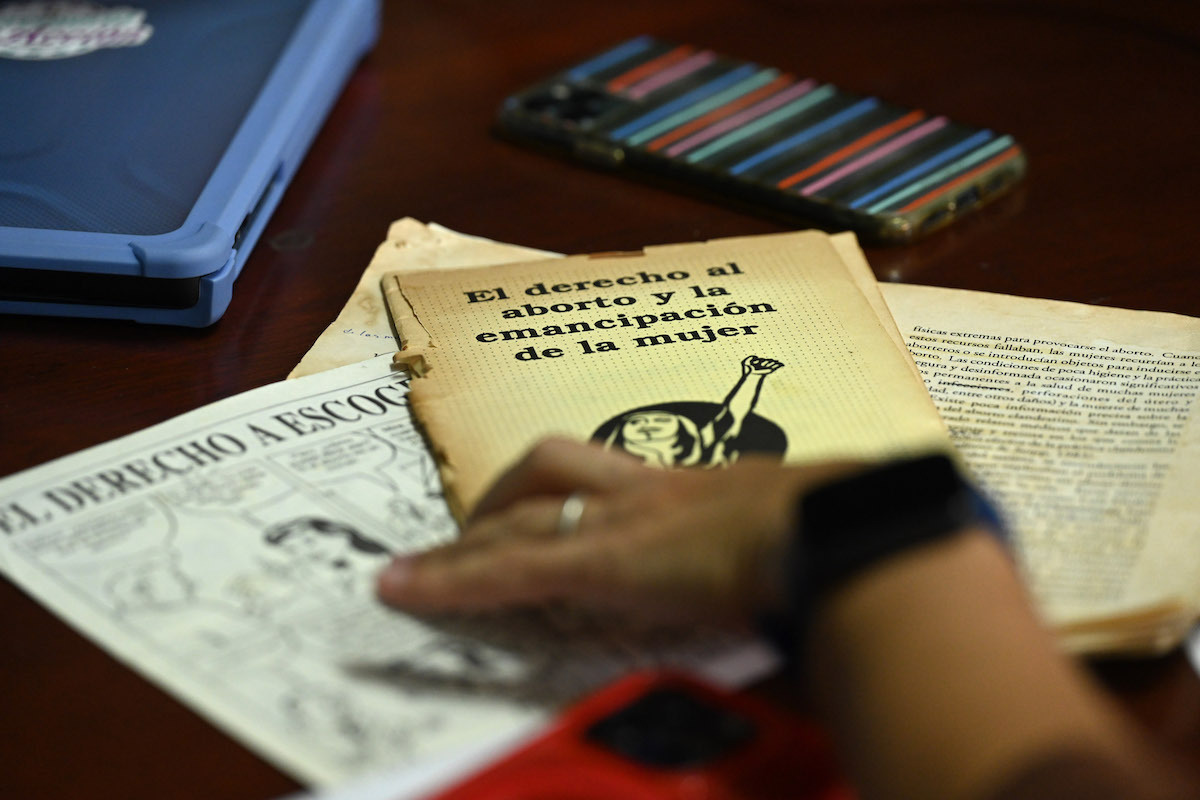
Ruth E. Arroyo Muñoz’s first protest to support abortion rights was a hand-painted black-and-white woman with her fist up, and the words “defiende derecho aborto” at the Puerto Rican State Penitentiary known as Oso Blanco. Almost 40 years after painting the mural, Arroyo Muñoz’s activism as an organizer for takes on new relevance now that the Puerto Rican government has enacted three laws that threaten abortion access and clear the way for lawmakers from the ruling party to tighten restrictions on healthcare access.
“As it happened in the states, the government [of Puerto Rico] is turning their back to science and to knowledge”, said Arroyo Muñoz in an interview. “They are signing into the legislature things that are supposed to be rules and regulations of agencies, because agencies have the expert knowledge,” she added.
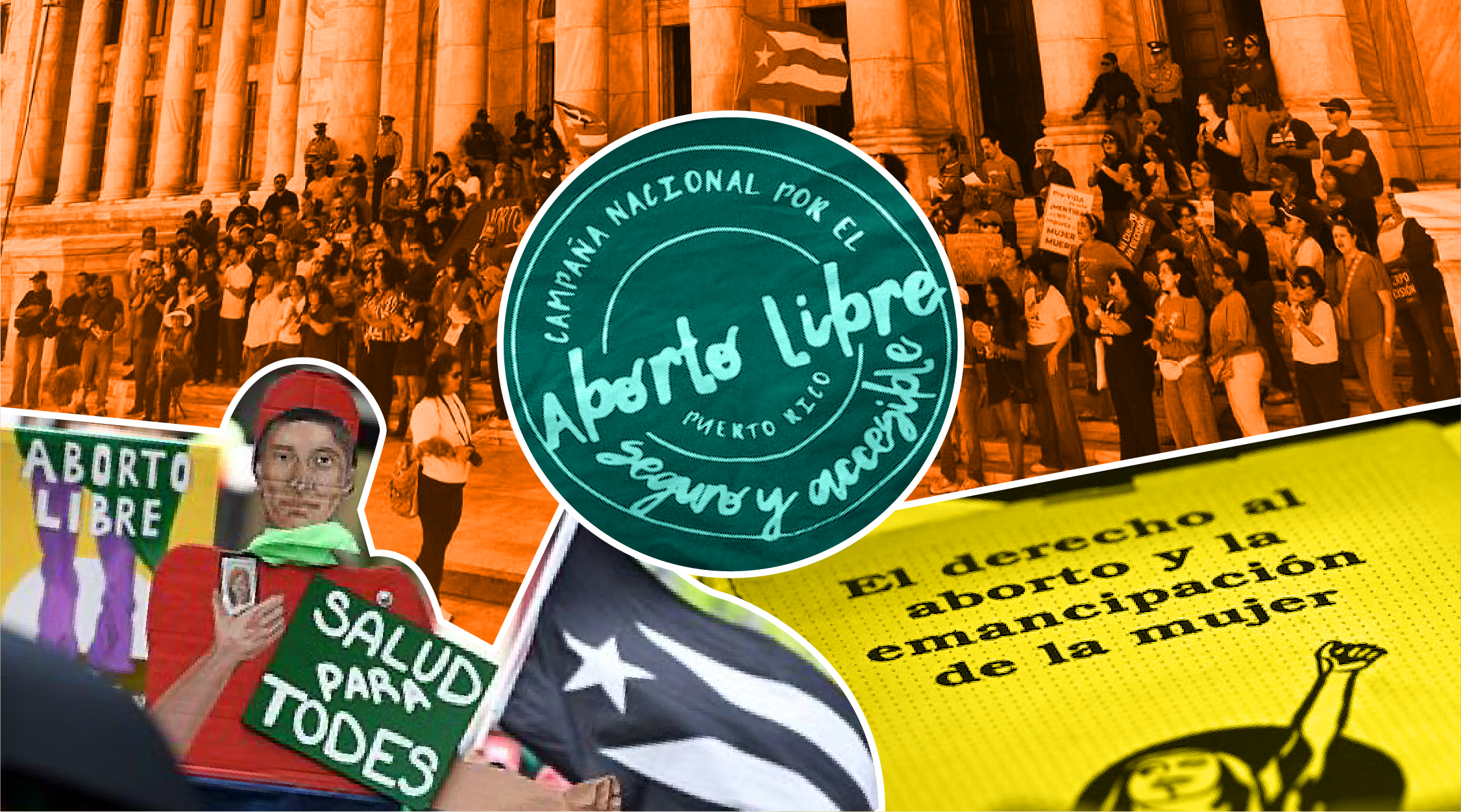
Aborto Libre is a feminist group trying to protect the right to abortion and maternal healthcare through education and demonstrations. Arroyo Muñoz explains that since January, the group has organized large-scale meetings and recently decided to focus its efforts on community campaigns, believing that lobbying Puerto Rico’s Legislative Assembly is pointless. Their next demonstration will be on April 23, at 5:00 p.m., in Río Piedras.
Politics around reproductive rights in Puerto Rico reflect political trends on the U.S. mainland, where red states and Republican politicians continue to introduce laws that limit, ban or criminalize abortion and access to reproductive healthcare following the overturn of Roe v. Wade.
Similarly, Puerto Rican officials of the majority political party, the Partido Nuevo Progresista (PNP) that advocates for Puerto Rican statehood, began to introduce legislation that could potentially affect access to reproductive services on the archipelago.
9 Millones took a look at the laws recently passed by the Puerto Rico legislature and signed by governor Jenniffer González Colón, to produce this explainer.
Act 18 of 2026: Defining a “fetus” as a human being in the Criminal Code
On Feb. 12, 2026, Jenniffer González-Colón signed Act 18, which considers "a fetus at any stage of gestation" a human being under the Criminal Code. Although this does not alter the state of law which excludes legal abortion from being considered a homicide, experts and advocates say that it has the effect of deepening a narrative that fertilized embryos hold the same rights as a person, emboldening abortion restrictions and criminalization of pregnant people.
“This was a piece of legislation that was promoted as something that would help prevent violence against women,” said Denise Tomasini-Joshi, a reproductive justice lawyer based in New York City at If/When/How, a group that provides legal defense for people facing criminal charges after getting pregnancy or abortion related care. “The reality is that anti-abortion laws have been used themselves as violence against women.”
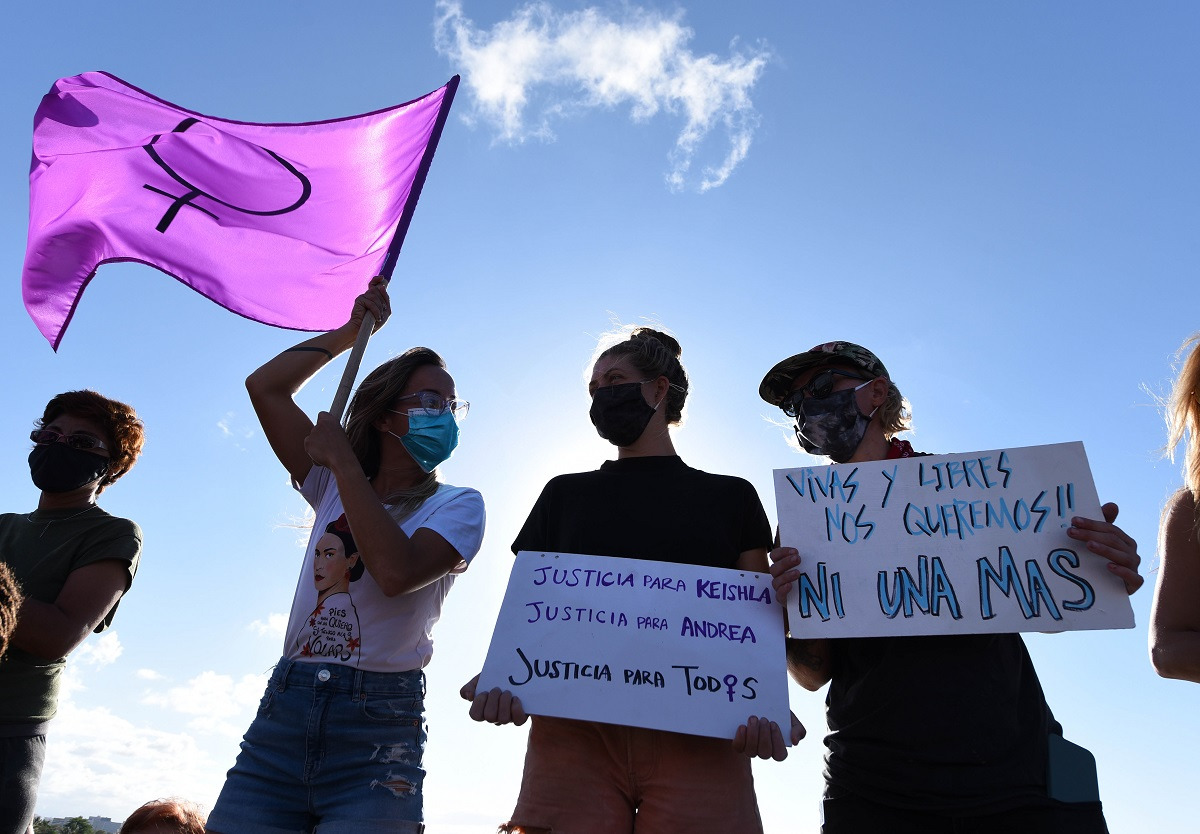
Tomasino-Joshi referenced Act 166 of 2025, known as Act “Keishla Madlane” in honor of the young pregnant woman killed by boxer Félix Verdejo Sánchez. The search and recovery of Keishlas’s body paralyzed the country as it was televised by national media; feminists and others who wanted to honor her gathered at the Teodoro Moscoso bridge to demonstrate. Act 166 classified the killing of a pregnant woman and her fetus (with the use of a firearm) as one of the worst crimes under the Criminal Code. Then, Act 18 of 2026 amended it to further declare a fetus as a human being.
Act 18 sets a precedent that anti-abortion activists may use to restrict or criminalize abortion. The law will not only restrict healthcare access for women, but also pose a danger to medical providers, experts say, as physicians could be pulled between care for their patient, the “rights” of a potential fertilized embryo, and possible legal ramifications.
While in a picket line protesting the legislation, Senator María de Lourdes Santiago Negrón, a member of the Partido Independentista Puertorriqueño (PIP), was notified that González-Colón would sign without holding public hearings. “There is violence in that,” Santiago Negrón said.
“Had those hearings happened, the medical professionals on the island were ready to provide evidence of how this would make caring for pregnant people more complicated,” Tomasini-Joshi said.
While the law technically involves the definition of murder, the impacts of this legislation reach far into the jurisdiction of medical practice. According to Tomasini-Joshi, who represents medical professionals navigating the legal landscape of reproductive healthcare, providers wonder, “What is this law saying about my professional responsibilities to my patient? Who is my patient in this particular situation?”
The uncertainty around legal ramifications makes an already scarce, necessary resource more difficult to obtain, advocates fear. Already, Puerto Rican physicians migrate to the U.S. mainland at alarming rates, with an estimated 4,380 to 6,000 leaving the island since 2014 in search of higher salaries, more access to specialty training, and a less politicized healthcare system, according to a study in Health Study OPEN journal.
“Puerto Rico already has an incredible dearth of maternal health services. Puerto Rico loses OBGYNs almost daily,” Tomasini-Joshi said. From 1999 to 2017, poorly funded healthcare and mass migration of providers has contributed to a 46 percent increase in maternal deaths in Puerto Rico, according to a study from BMC Women’s Health.
Act 183 of 2025: Recognizing an embryo as a human being in the Civil Code
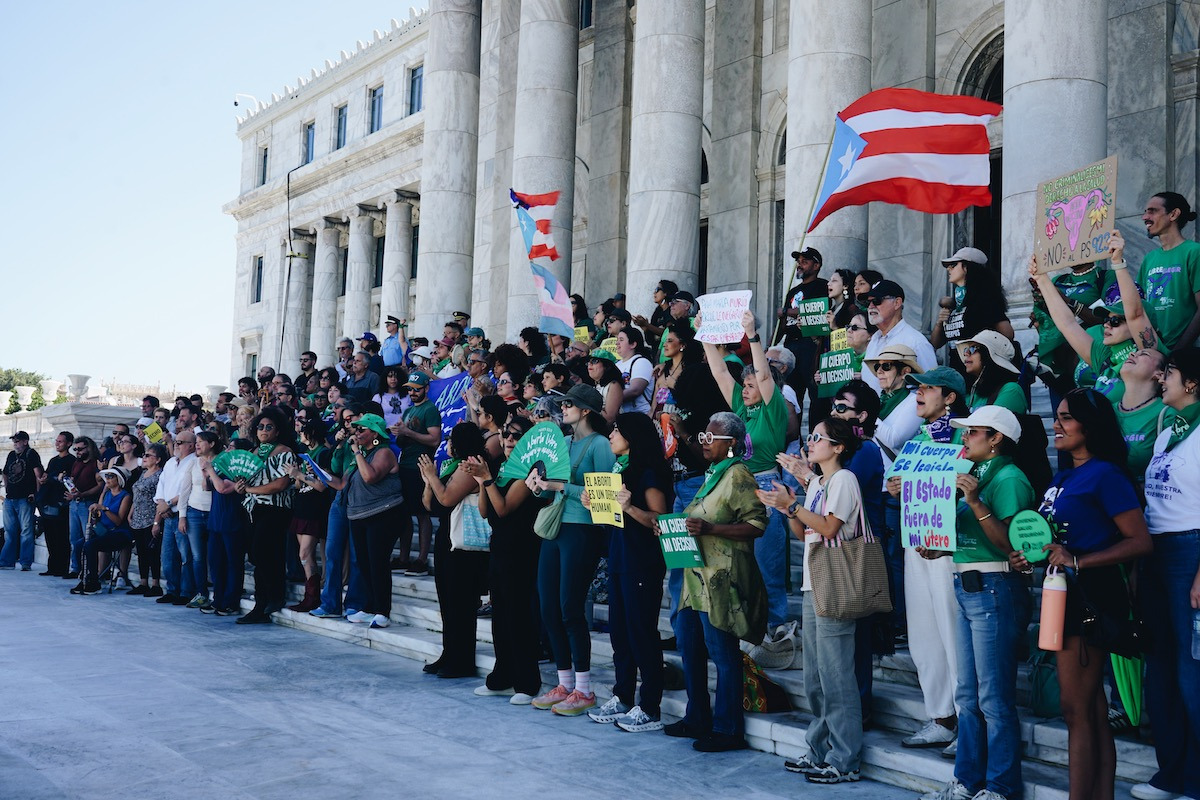
Act 18 comes on the heels of another law that threatens reproductive access. On December 21, 2025, González-Colón signed Act 183, Puerto Rico’s personhood law, also introduced by Thomas Rivera Schatz, president of the Puerto Rican Senate. The law grants judicial personhood at the moment of conception. Laws that recognize fertilized embryos as people introduce the chance for citizens to be criminalized for having a miscarriage, receiving medical treatment or being in an accident that results in a miscarriage at any point of gestation.
“We see this as something of a back door that at some point is going to attempt to abolish abortion,” Tomasini-Joshi said. “We think this is the preferred outcome for the people who proposed this particular piece of legislation.”
Although this law does not prevent abortion access, it is “reinforcing the idea that there is another person,” whose rights may outweigh the health and wellbeing of the patient, according to Tomasini-Joshi.
Act 122 of 2025: Controlling abortions for minors under 15 years old
On October 30, 2025, González-Colón signed yet another law that limits abortion access. Act 122 requires a parental signature before providing an abortion to a minor younger than 15 years old. The law also requires reporting of such cases to the government Administración de Familias y Niños.
“The harm to this young person of having the same adults that are probably hiding their abuse, excusing their abuse, committing their abuse, also be responsible for approving their bodily autonomy is a double violation,” said Tomasini-Joshi.
A Long History of Manipulating Reproductive Freedom
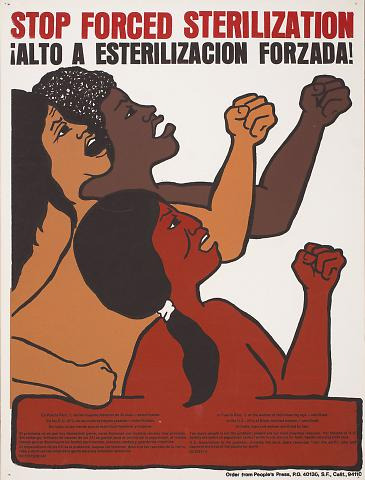
As an effect of U.S. colonialism, reproductive freedom in Puerto Rico has been manipulated and controlled, from forced sterilization of women beginning in the 1930s to trials of the birth control pill, Enovid, before FDA approval in the 1960s.
Today, the interpretation of new legislative language by Puerto Rico’s right-leaning government is what poses danger, according to Sen. Santiago Negrón, who's also an advocate for reproductive rights in Puerto Rico.
As anti-abortion rhetoric rises in the U.S. and Puerto Rico, organizations like Aborto Libre are resisting in the form of demonstrations and education. “[Aborto Libre] is the umbrella holding the movement together,” said Santiago Negrón. However, she added, the reality is that political power is necessary for change in legislation.
“They start with these things that they want to pretend are benign, which are not benign, and that opens the door for all these other things that are more harmful,” Tomasini-Joshi said.
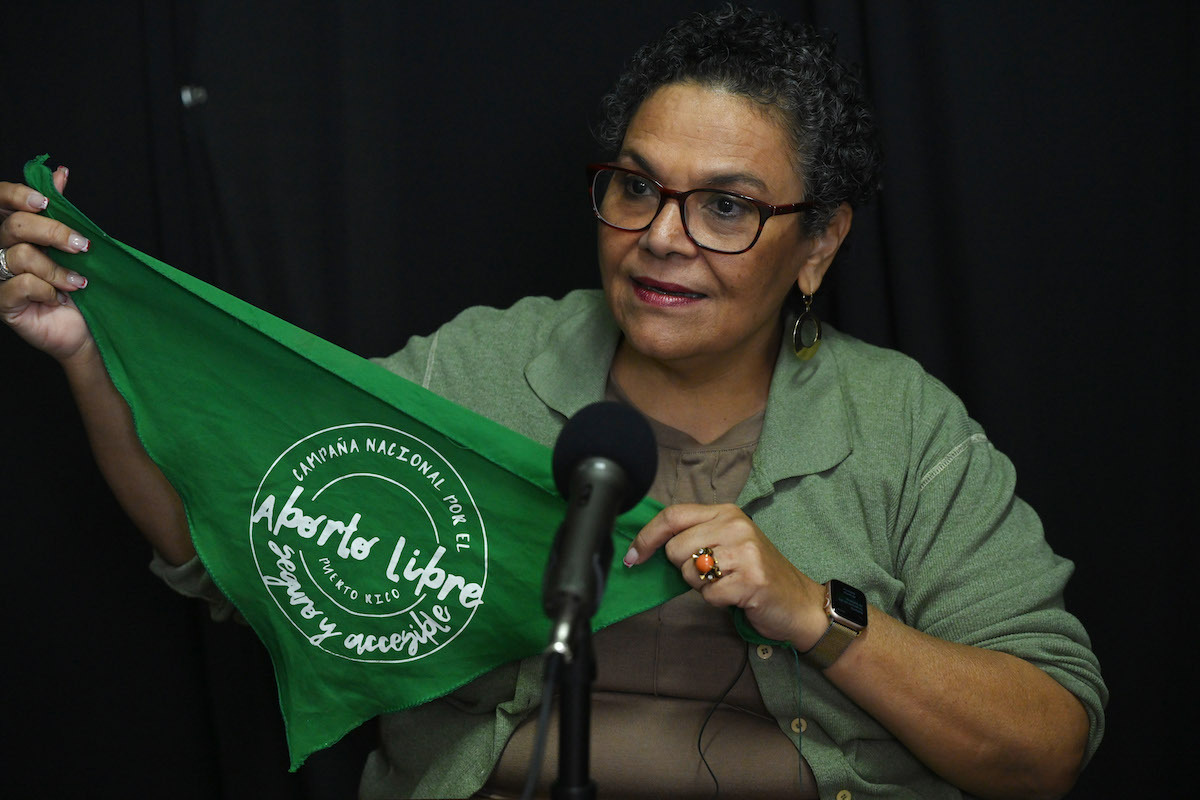
Arroyo Muñoz has seen abortion rights be granted, taken away and restricted again. As a feminist activist since the 1970s, she watched the passing of Roe v. Wade, the wave of violence against abortion providers in the 1990s, and now the return of restricting reproductive rights. As Arroyo Muñoz sees it, these laws are about control and are aimed at abortion access.
"These laws are “subjecting women to extreme vigilance, limiting women’s autonomy, and it is putting at risk women’s access to health services,” noted Arroyo Muñoz.
Santiago Negrón agrees. “They are building the foundation for the eventual absolute ban of abortion,” she said. “I think that is where this neofascist government is headed.”
Lara O’Dell is a freelance journalist who covers women’s health, LGBTQ+ issues and culture.
Journalist and 9 Millones’ Editor-in-chief Laura M. Quintero contributed editing and fact-checking. Journalist and 9 Millones CEO Camille Padilla Dalmau copyedited the English version.