Political Gaslighting: How to Identify It and Respond
As disinformation trends rise, so does the impact to citizen participation and mental health
Gaslighting has become an increasingly common term when discussing toxic relationships. This phenomenon became even more visible when the Merriam-Webster dictionary recognized it as its most searched word in 2022.
Merriam-Webster defines gaslighting as a "psychological manipulation”, usually over an extended period of time, that causes the victim to question their own thoughts, perception of reality, or memories, typically leading to confusion, loss of self-esteem, uncertainty of one's mental stability, and a dependency on the perpetrator.
But a more recent definition has emerged. The dictionary itself attributes this new definition to the increasing nature of disinformation in modern media. Experts on the subject point out that gaslighting is present in the political sphere.
"The unfortunate truth of gaslighting is that it is far more pervasive and invasive than we think or know. And today, it is recognized as a dynamic between two people, groups of people, or institutions in power because it’s a strategy that works to control or manipulate others for their own benefit.,” wrote Robin Stern, a psychoanalyst at Yale University and author of the book The Gaslight Effect, for Psychology Today.
If gaslighting can have nefarious effects on one person's mental health, imagine how it could affect an entire society’s well-being.
How does political gaslighting work?
Similar to gaslighting in relationships, this pattern employs strategies that distort how people perceive reality. Instead of isolating a single person, it uses strategies that cause people to lose their sense of agency and control, impacting citizen participation.
Often, these patterns allow manipulators to achieve goals such as:
- Influencing public opinion
- Making decisions that harm citizens
- Dividing or polarizing groups of people
- Undermining the credibility of institutions, media, and activists
- Monopolizing political power
If effective, this type of gaslighting can distort how people perceive historical data and current events. Although political propaganda is a key example of disinformation in political contexts—in Nazi Germany, the Cold War, and after the attacks on the Twin Towers (9/11)—the past decades have brought a challenge that makes it easier than ever to spread disinformation: digital media.
Faced with an ocean of content, it is difficult to distinguish reality from unfounded information. Worse, some citizens lack the skills to discern between fake news and verifiable information.
"We get overwhelmed quickly with information and look for shortcuts to know what to believe and what not to believe. And it is in seeking those shortcuts where we fall into the grip of disinformation," explained Mayra Vélez Serrano, co-founder of the Puerto Rican Public Opinion Laboratory (LabPOP, in Spanish) at the University of Puerto Rico.

The professor said in an interview with 9 Millones that this tendency is worsened by predispositions that even educated people have towards accepting false information, such as conspiracy theories. This phenomenon could be explained by confirmation biases: the tendency to seek evidence that confirms existing beliefs and to ignore what contradicts them.
Disinformation also impacts trust in institutions, and can create divisions between those who believe in institutions and those who doubt them, according to Vélez Serrano.
“It can lead some people to not participate and to completely alienate themselves, just as it can lead some people to become active and obsessed, up to a certain point, until reaching a level of ultrafanaticism, where their minds can not accept any information that could disprove what they believe. In other words, we have a type of polarizing effect," explained Vélez Serrano.
In a 9 Millones poll published at the end of 2024, Puerto Ricans barely showed trust in the country's governor and the legislature, with 24.4% and 16.4%, respectively, saying they trust that their decisions are beneficial "always" or "most of the time."
- In contrast, municipal governments (42%) and the federal government (39.8%) are more trusted among citizens.
Living under the “Shock Doctrine”
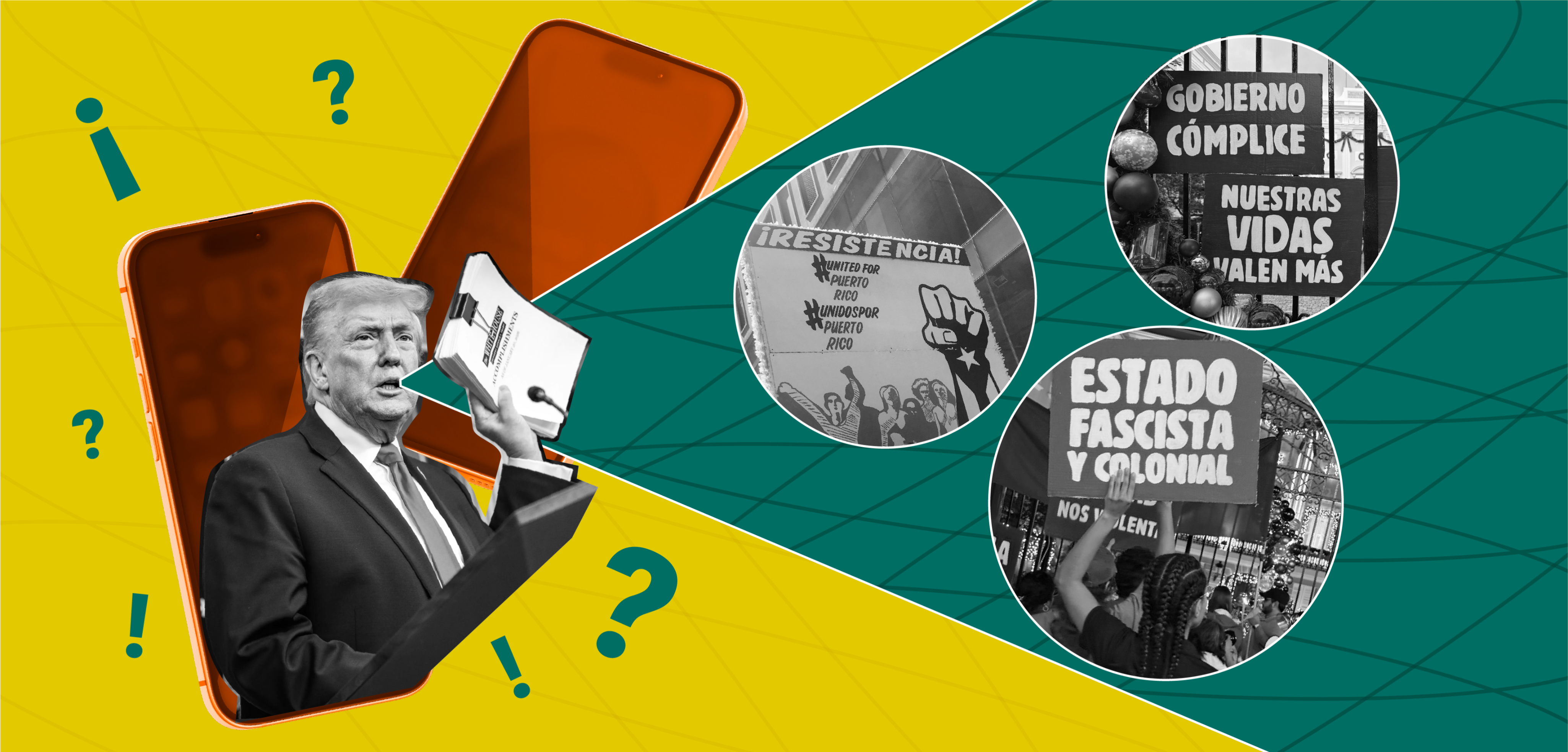
Activists have highlighted how the excess of information can impact their ability to verify facts, organize movements, and respond effectively. As an example, the Colectiva Feminista en Construcción cited, in a community conversation organized in mid-February, the more than 50 executive orders issued by President Donald Trump in January 2025 as an attempt to spread confusion under a "Shock Doctrine".
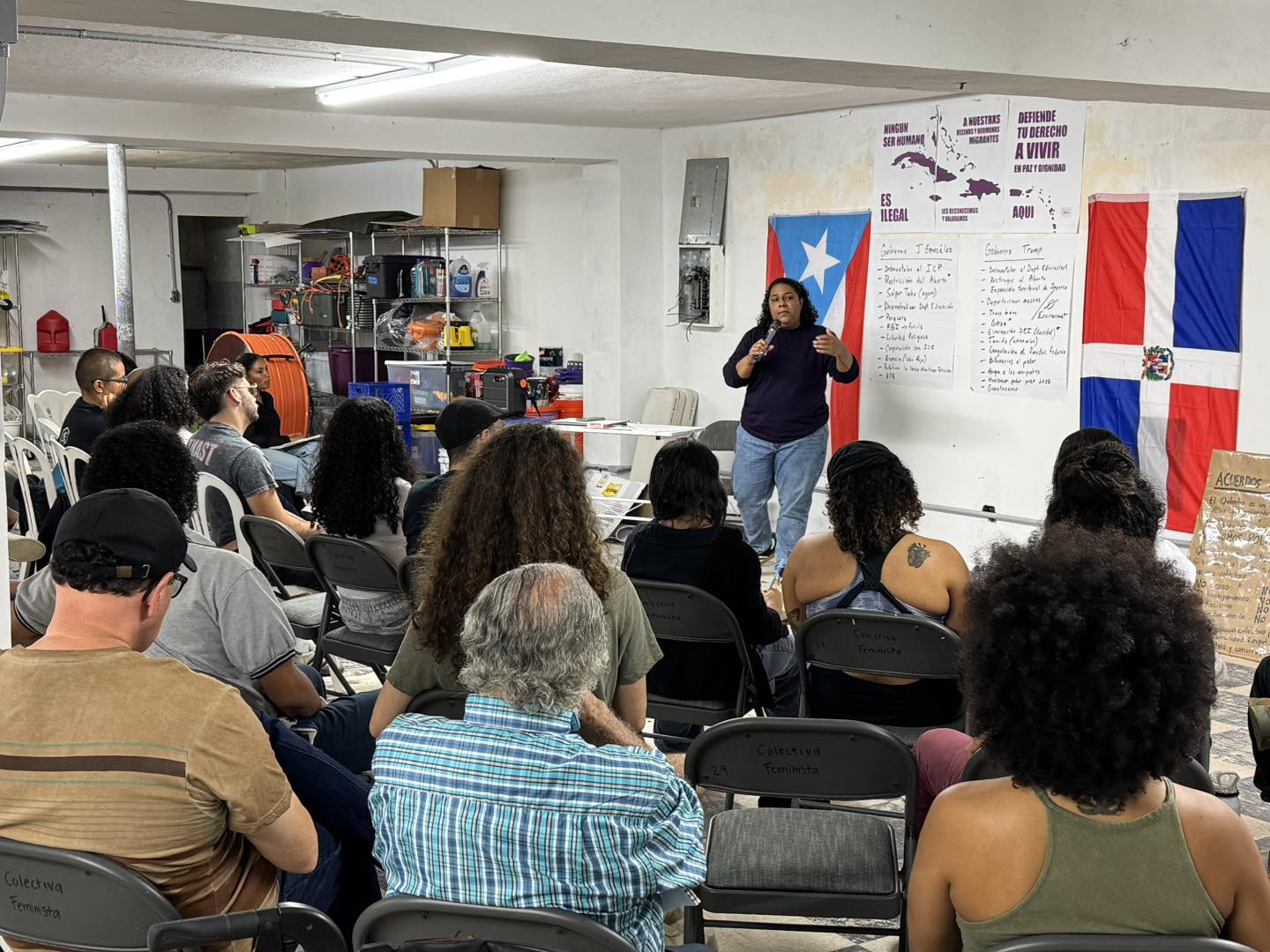
The purpose of this tactic, according to the journalist who popularized the theory, Naomi Klein, is to advance neoliberal policies that increasingly endanger protections and gained rights in times of crisis.
A lack of trust in previous governments, coupled with the desire for a solution during a crisis, makes people susceptible to falling for disinformation, even when it comes to ideas that have become socially acceptable and are protected under the law.
“The notion of particular crises and needs are created, generating a lot of public discussions [...]. This generates an agenda of what matters, but it twists the reality of what people in this country are actually going through,” explained Zoán Dávila Roldán, spokesperson for the Colectiva Feminista en Construcción, in conversation with 9 Millones.
How to confront political gaslighting?
It’s difficult to recognize a pattern of manipulation, but there are several ways to face it once you identify it. Below are some of the tips shared by Vélez Serrano and Dávila Roldán.
- Create and share content responsibly: When creating content, verify information with multiple sources. Information should not be repeated without verifying it first, especially if it is polarizing or can create aggressive reactions. In an interview, disinformation should be confronted and vague statements should be verified. Likewise, before sharing a news story you have doubts about, verify it using reliable resources.
- Foster media literacy: Vélez Serrano pointed out that media literacy initiatives can help people acquire tools to distinguish this kind of disinformation and manipulation. UNESCO considers that media literacy provides "a set of essential skills to face the challenges of the 21st century, including the proliferation of disinformation and hate speech, the decline of trust in the media, and digital innovations.” Initiatives such as Medioscopio, from the Center for Investigative Journalism,in Puerto Rico, promote these skills.

- Promote constructive spaces instead of divisive ones: Rather than exclusively allowing institutional leaders to comment on news, the everyday person should also be centered, especially those who participate in civic and political communities and organizations, highlighted Dávila Roldán. These spaces should also encourage open and safe debates, where communities can work collectively to identify and address cases of psychological manipulation, wrote psychologists Vernita Perkins and Leonard A. Jason for Psychology Today.
- Identify logical fallacies: The co-founder of LabPOP explained that interviews or serious political discussions can be derailed when a person uses a logical fallacy. As an example, she cited the straw man fallacy: diverting attention from an issue with a topic that is not related to what is being discussed.
"Sometimes the debate can't even happen when these topics are mentioned. [...] It is no longer a discussion where you can talk about the facts and think, 'what are the costs of this? How does one get harmed? What are the benefits of these positions?'. If you immediately go to [talking about] 'Cuba and Venezuela,' well, forget it, there's no more discussion [to be had]. These are forms of [a] strawman [fallacy],” she said in reference to common panel discussions in the Puerto Rican media.
Identifying these logical fallacies can help people to confront and hold leaders accountable, especially those who seek to manipulate information for their own benefit.
- Lean on each other in the face of chaos: Those who are overwhelmed by disinformation and feel powerless can seek spaces where they can discuss and validate their feelings, or create these spaces. Mutual support is key to avoid apathy and feeling that there is no way to demand clear responses:
“Something that is directly impacted, precisely because of this notion of chaos, because of this disinformation, is our capacity to imagine and our capacity to understand that we can truly create something different. We see that these people have a lot of power, but there is also a lot of power in communities, in the people, but that power must be organized,” said Dávila Roldán.