Donald Trump and Jenniffer González Derail Energy Cooperative Progress in Puerto Rico
Philanthropists discuss how to mitigate the funding setback and contribute to energy resilience for low-income communities
The Trump Administration and Puerto Rico's Governor Jenniffer González Colón canceled a $6 million grant to Abeyno Coop,the energy cooperative founded by the La Margarita Residents Association in Salinas. This impedes its ability to assist low and moderate-income residents in the South-West municipality whose health depends on working electricity. Both the federal and local governments diverted the money from the community's hands to Puerto Rico's oil-fired power plants, operated by a subsidiary of the multinational New Fortress Energy.
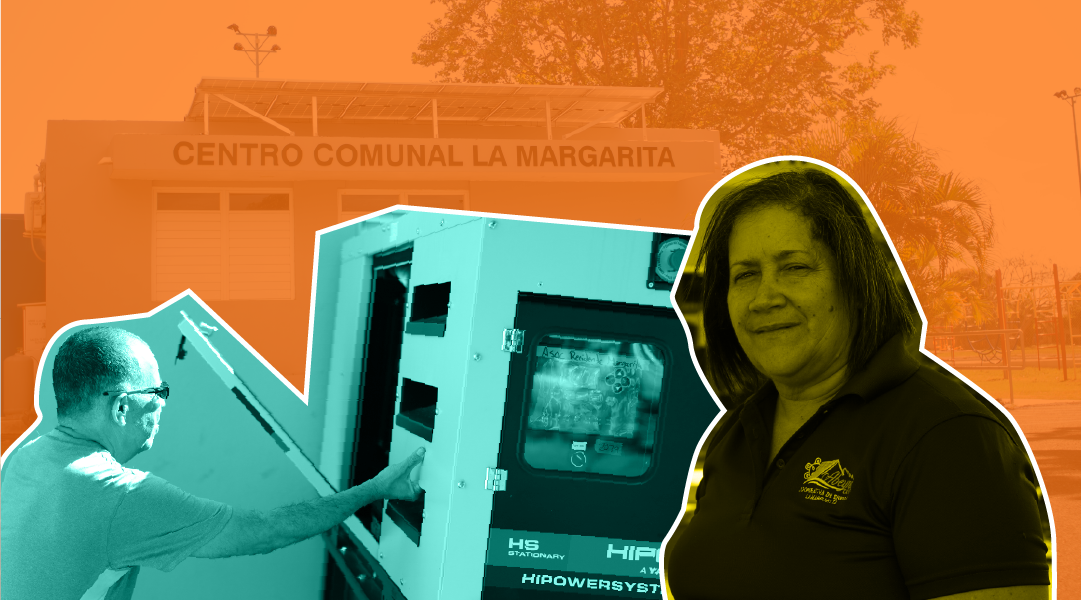
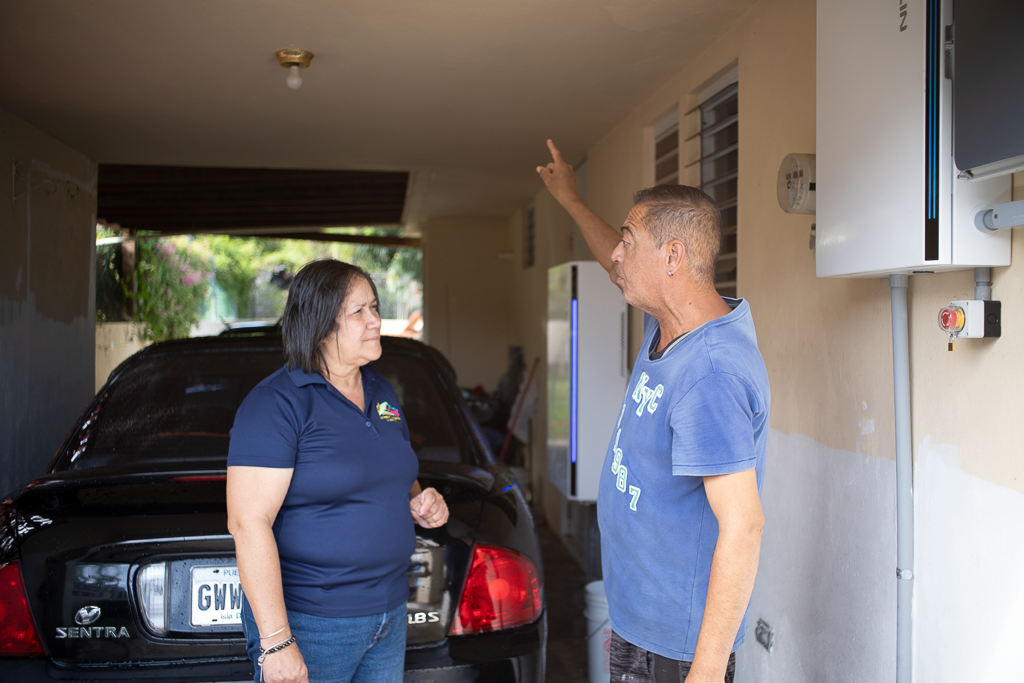
La Margarita has 314 resident families and many of them have a high number of people with multiple medical conditions whose treatments and medications depend on continuous electric service. Together with the organization Solar United Neighbors, the Association secured the multimillion-dollar grant, which would have allowed them to install 150 solar energy systems for low-income residents of El Coco, Villa Cofresí, La Playa, El Coquí, Vertero, and El Pueblo, all neighborhoods in Salinas.
“For them, it was going to be the only way they would access solar energy... Through a project as wonderful as Abeyno Coop, the community was going to have ownership and [the system] was not going to be in foreign hands,” commented David Ortiz, director of Solar United Neighbors (SUN) in Puerto Rico. “Reliable energy, in many cases, is a matter of life or death.”
When SUN's community organizers called the eligible people to notify them of this cancellation, people cried "because they had hoped it would happen," Ortiz recounted. They had been evaluating and recruiting 160 people for practically a year, verifying their income level, home ownership, and that they had a medical condition dependent on electric service. "What is stressing us is the search for funds to continue with that project... Three people in the community have already died waiting for these panels," Ortiz lamented.

The cancellation of these funds, in January of this year, impacted low-to-moderate-income residents and people with disabilities who would have received the purchase and installation of solar power generation and storage systems.
The allocation in question belonged to the Puerto Rico Energy Resilience Fund, totaling $1 billion, which the Department of Energy (DOE) presented in February 2023. That year, the DOE announced that it was committing $453 million to the Solar Access Program so that 40,000 of "the most vulnerable residents" in the archipelago would have access to solar energy and storage, thus contributing to the goal of 100% generation from renewable energy sources.
In addition to the collaboration between La Margarita and SUN, the entity Barrio Eléctrico was impacting several communities in the North, West, Center, and South regions of the Puerto Rico main island; the Environmental Defense Fund was working with the organization Mujeres de Islas in Culebra; and Let's Share the Sun had allied with community groups in Adjuntas.
However, the largest component of that program—which represented $400 of the $453 million—fell into the hands of Generac Power Systems and Sunnova Energy Corporation, for the purchase and installation of solar panels for qualified groups. Before the cancellation by Trump, over 6,000 homes had already been impacted, according to the director of the Hispanic Federation in Puerto Rico, Charlotte Gossett Navarro. The foundation that advocates for Hispanic equity in the United States had been selected to educate on the use and maintenance of solar systems.
“The reason this fund exists is because they wanted to protect the life and health of people in Puerto Rico. It is not the same when the power went out for me: it can be an inconvenience, but for other people in Puerto Rico losing their food in the refrigerator is not eating; losing power means their respirator turns off and they lose their life; or they have medicine that gets damaged in the refrigerator. When the power goes out, we are not all in the same situation. This fund was created to address that inequity,” Gossett Navarro highlighted.
However, the Trump Administration decided to redirect the remaining $369 million for repairs and improvements to the generation, transmission, and distribution systems, which are managed, respectively, by Genera PR—a subsidiary of New Fortress Energy—and LUMA Energy, a consortium between Quanta Services and ATCO.
Following the fund cancellation, Governor Jenniffer González Colón thanked the Secretary of Energy, Chris Wright, for "prioritizing" the archipelago's historical energy challenges. González Colón approved the move: “Instead of benefiting only a few customers, allocating these funds to urgent projects that improve the resilience and reliability of our electrical grid will bring widespread and long-lasting benefits to the 3.2 million Americans living in Puerto Rico.”
The Governor not only omitted the communities excluded but also changed the stance she had expressed in October 2022, when she joined calls for $5 billion to be allocated to support people with disabilities. The press secretary for La Fortaleza did not answer an interview request from 9 Millones.
In its justifications, the DOE categorized access to solar energy systems as a risk to U.S. national security, allegedly due to generating fluctuations in the electrical grid, instability, and fragility.
For the president of the La Margarita Residents Association, Wanda Ríos, “that is nonsense.” “If there were no blackouts in Puerto Rico last summer, after they [the government] announced them, it was because of the people who have solar panels on their roofs,” who sold the surplus energy they had generated to LUMA. “Those who have kept the system operating are the people with solar panels,” Ríos stated.
In its 2024 report, LUMA confirms that it has resorted to energy stored by customers to avoid power outages in Puerto Rico, and that the expansion of the program Customer Battery Energy Exchange (CBES) “will make power outages in Puerto Rico infrequent.” Between June and December 2025, CBES helped avoid or minimize blackouts about 10 times, according to SUN technical analyst, Sean Malone, who studied the consortium’s monthly reports.
“Everyone was going to be interconnected to the system, meaning they were going to be providing clean and cheap energy, which was going to benefit everyone in Puerto Rico,” Ortiz pointed out.

Necessity Led La Margarita to Organize
Ríos, a U.S. Army veteran, emigrated to Florida after Hurricane Maria. The storm that hit Puerto Rico on September 20, 2017 destroyed the electric power distribution system and left most of the population without service for months; in some cases, almost a year. In 2020, she returned to Puerto Rico. “The day after I arrived, I spoke with some friends of mine, and they got me some boxes of masks, and I went door to door delivering the masks,” she recounted in an interview with 9 Millones.
During the COVID-19 pandemic, neighbors established the La Margarita Residents Association. Ríos explained that it was a time of great necessity and they organized not only to distribute masks but also water and groceries. In June 2020, 43 of its residents participated in the inaugural meeting.
In January 2022, the organization, which is constituted as a non-profit entity for charitable purposes, opted to develop an energy cooperative.
“We decided that the goal was to have a resilient and sustainable community, and for that, we had to have a strong electricity service”, she recalled.

Contrary to other entities of this nature, the La Margarita Residents Association intended to extend its services to the other communities in Salinas. Serving the neighboring communities would allow the cooperative to generate additional income from the fees charged to those clients, while addressing the need for access to energy for the most vulnerable communities. “Here in Salinas—and in Puerto Rico—there is a level of poverty that people have no idea about. These are people who, for the most part, had jobs and have a pension, but it is $300 or $400 a month, which is not enough to live on,” commented Ríos. Like the 54 cooperative members, these beneficiaries would pay a “small amount of money,” which funds a government-required reserve.
Achieving Access to $26 Million for the Community
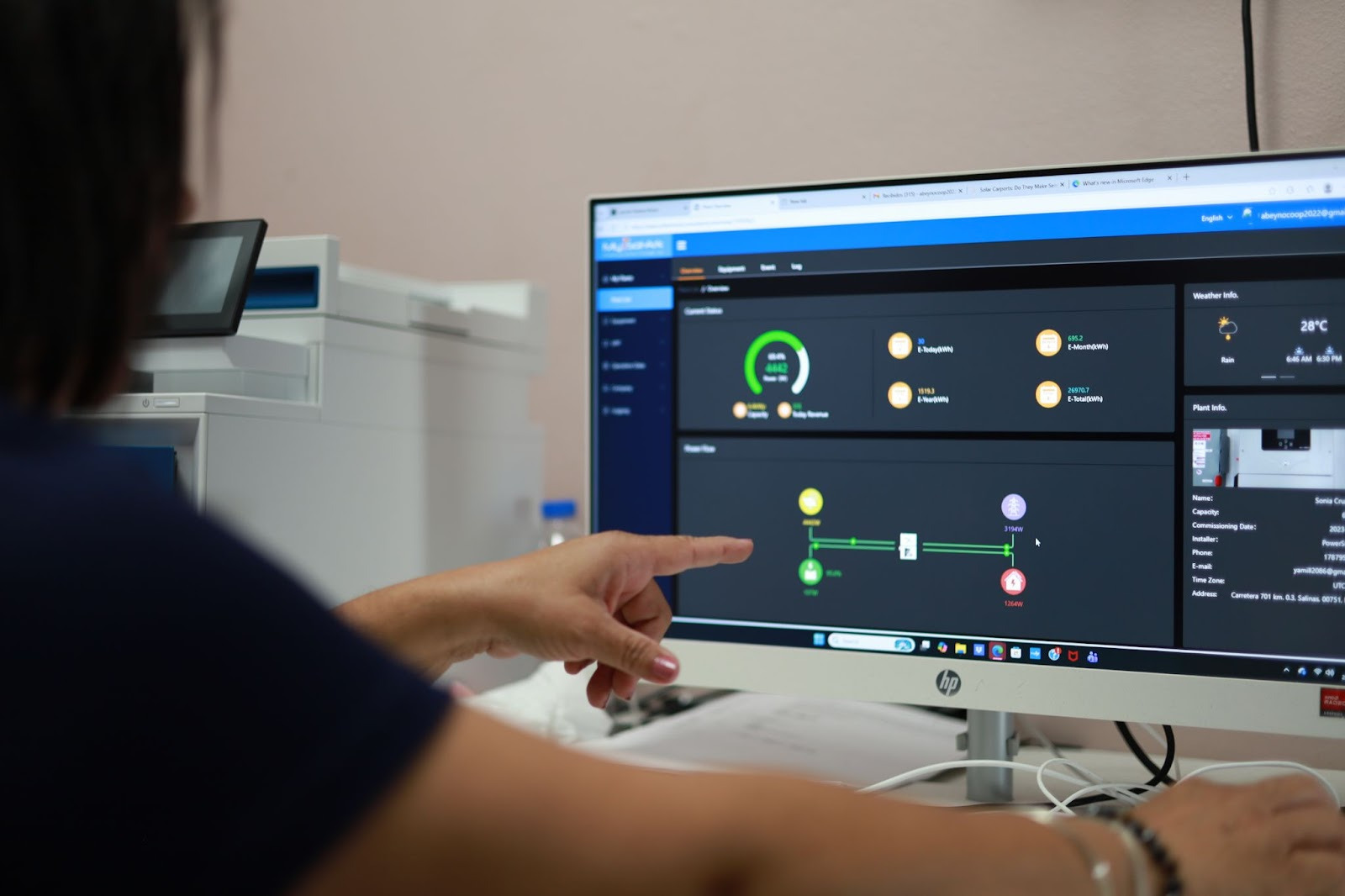
With an initial $75,000 donation made by the Salinas municipal government, the community installed solar panels. The Association also made the most of its non-profit classification by competing for the Community Clean Energy Coalition Prize, where they secured $255,000. With those funds, solar panels were installed on five houses and the La Margarita Community Center.
With donations from the Dunn Family Foundation, Solar United Neighbors, Earthspark International, and using its own income, they managed to raise an additional $80,000 to install four more systems. Despite this, four years after founding the cooperative, only eleven houses in the neighborhood have solar energy systems.
Between 2024 and 2025, the Association raised the largest amount of funds in its history. In addition to the $6 million from the Energy Resilience Fund, they secured another $20 million from the Environmental Protection Agency’s (EPA) Community Change Grant program.
However, the Trump administration also canceled these funds. The Association was only able to use little more than $260,000. “We had to return the balance,” Ríos lamented. According to the community leader, the funds were intended for the development of 20 resilient community centers, like the La Margarita Center, so that communities could have spaces where they could access electrical energy and drinking water during emergencies.
“[These] projects that [La Margarita] had won could serve as a super model for other communities in Puerto Rico and even outside of Puerto Rico,” Gossett Navarro said.
Philanthropic Support for Renewable Energy in Puerto Rico
Before Hurricane Maria and the estimated 3,000 deaths resulting from the lack of power, hedge funds and other companies were already circling Puerto Rico, anticipating the public debt default and the government's lack of financial liquidity, which made investment in PREPA's antiquated infrastructure difficult.
Just four months after the cyclone, the New Progressive Party government announced the start of PREPA’s “sale”, a process that ended years later in the hiring of LUMA Energy as the privatizer of the transmission and distribution network, while hiring Genera PR for the fossil fuel-based generation plants.
The privatization of the Authority occurred under the promise that the necessary improvements to the electrical infrastructure would occur and that the service would improve. However, nothing has been reliable for Puerto Ricans except for the power grid being unreliable. To respond, many non-profit organizations dedicated part of their funds to reinforcing the stability of the electric service and promoting renewable energy sources. Above all, because they recognize that the government has delayed diversifying the country's energy sources (renewable energy sources represent only 8% of the total generated).
“To my knowledge, it is the first time that the energy topic has become one of the main issues [for the third sector and philanthropy]. That is precisely because of what we saw with Hurricane Maria: the longest blackout in a U.S. jurisdiction, and the consequences of the blackout on the lives of people in Puerto Rico,” commented Gossett Navarro.
While some organizations prefer to donate solar panels to low-income individuals, others have recognized energy cooperatives as a collective response to the lack of public investment in the archipelago’s electrical infrastructure. The Legislative Assembly authorized this type of cooperative seven years ago, when it approved the “Puerto Rico Energy Cooperatives Act.”
The president of the Puerto Rico Community Foundation (FCPR, in Spanish), Nelson Colón Tarrats, told 9 Millones that energy cooperatives are a “model of real empowerment” because they create a community-led business that generates income, strengthens local governance, and reduces dependence on vulnerable systems. “An energy cooperative converts energy into a tool for community economic development. It is a more structural and transformative model because it builds self-sufficiency, not just relief,” he pointed out.
The FCPR provided the initial capital ($125,000), which allowed Pirucho Coop (also known as the San Salvador Energy Cooperative) to install solar energy systems in the first eight houses in the community. The San Salvador community—the neighborhood furthest from Caguas’ urban center, nestled in the Sierra de Cayey—became the first energy cooperative in Puerto Rico in 2019. Subsequent grants from the municipal government of Caguas and the DOE were used to complete installations in 31 homes.
“The equipment is the property of the cooperative and is installed free of charge. The cooperative also assumes the responsibility for maintaining the panels and the installation,” assured Father Feliciano Rodríguez, parish priest of the community's Catholic church.
The cooperative was awaiting the awarding of a $1 million proposal with the DOE, but changes in the Trump Administration's energy policies canceled that budget item, the priest lamented. With those funds, Pirucho Coop could have increased the number of houses with photovoltaic systems to 70, “which would have allowed us to reach the ‘break even point’ to generate sufficient income to continue installing systems on our own at a rate of one house per month,” Father Feliciano assured. Without that momentum, it will take the cooperative three to four years to generate enough capital to be self-sufficient.
Similarly, the La Margarita Residents Association is contacting foundations to move forward with its project, Ríos said. Ortiz assured that they remain committed to the project. “We are going to continue working with Abeyno Coop; the only thing is that now it is going to take much longer,” he acknowledged.
Meanwhile, Gossett Navarro indicated that Hispanic Federation and other organizations are in conversation with the DOE trying to ensure that the program is not canceled or, at least, that works in progress in homes are allowed to conclude. The various entities are evaluating legal remedies, mediation remedies, and advocacy “trying to raise the issue of the impact this has on people.”
“All the organizations have the goal of continuing to raise funds even if it is a slower path,” commented Gossett Navarro, immediately adding that although philanthropic funds do not have the same impact, they do allow them to demonstrate what is possible. “The government can see evidence that this works and then invest in that solution with more confidence… At this point, there is too much evidence in Puerto Rico that solar energy is a solution for everyone.”
Juan A. Hernández is a journalist with 34 years of experience covering the executive branch, worker unions, and communities.
Laura M. Quintero is the editor-in-chief of 9 Millones, and specializes in investigative journalism and Solutions Journalism.