How Vega Baja’s Land Bank is Reshaping Affordable Housing in Puerto Rico
The renovation of the first home for sale under Puerto Rico's community land bank model was made possible by a $75,000 line of credit
VEGA BAJA — Cuca tried to explain where the house was located: “Close to City Hall, straight ahead, down a little alley…” When she realized I wasn’t understanding, she suggested “what the young people use” for directions. So the directions app on my phone led me past pharmacies, flower shops, corner stores, and lottery kiosks lining the sidewalks near the public square.
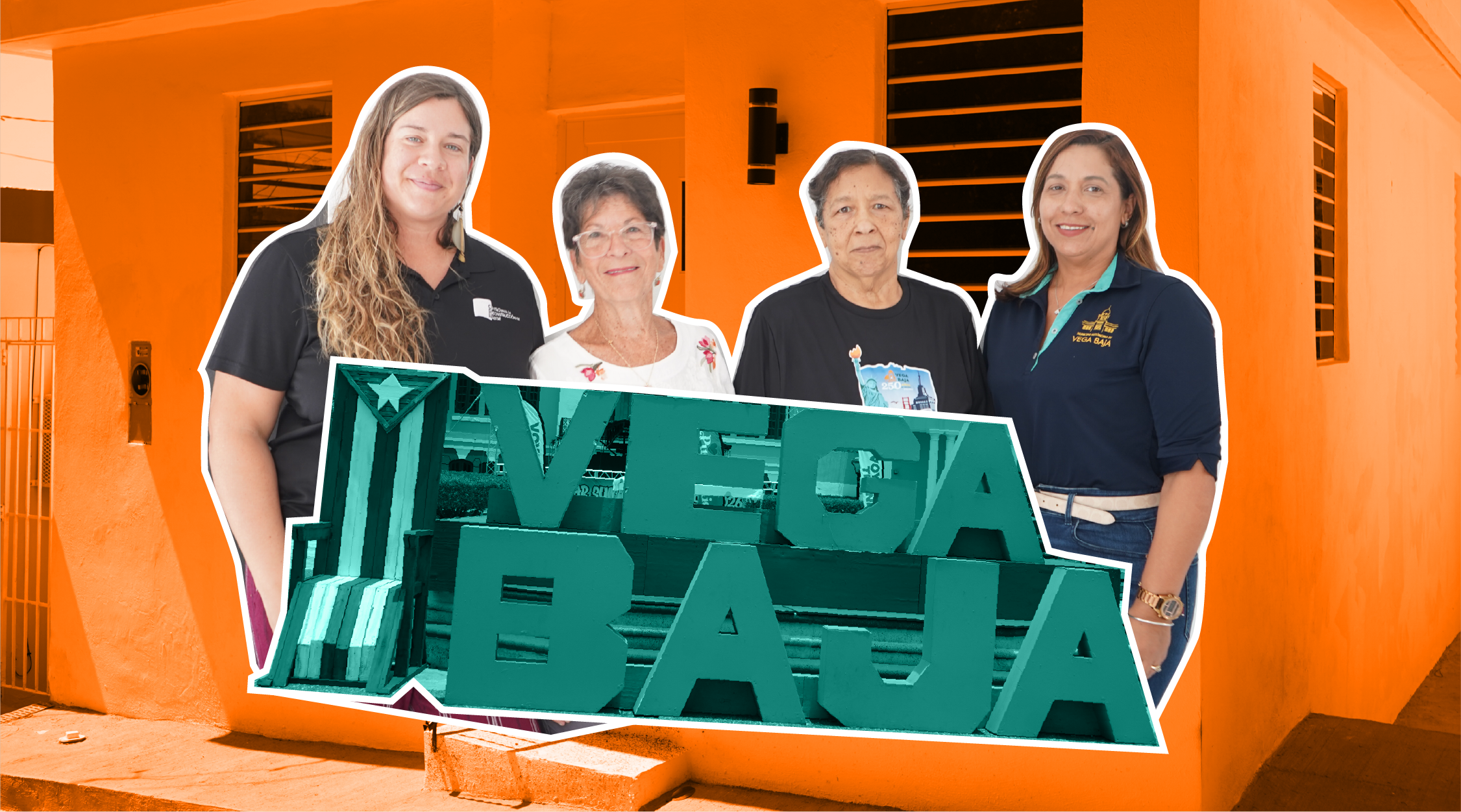
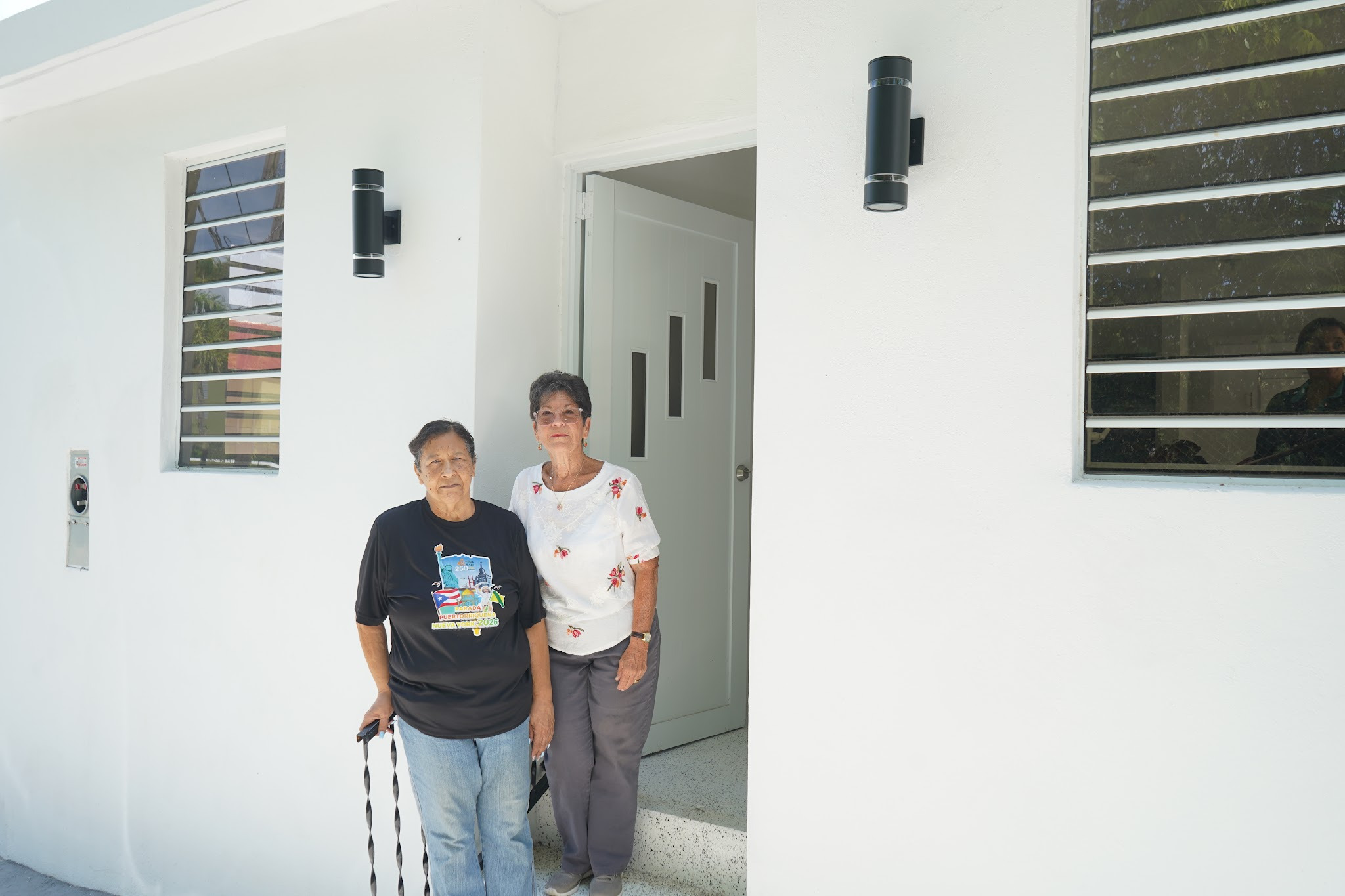
Down those streets stood a concrete house, freshly painted white. A few months ago, it was a public eyesore; today, it has become affordable housing currently being appraised for a resident in the municipality of Vega Baja. Upon entering, the echo of the unfurnished interior amplified the enthusiasm of Cuca, a community leader. As part of the Community Advisory Council of the Vega Baja Land Bank, Cuca represents a movement to provide affordable housing in Puerto Rico.
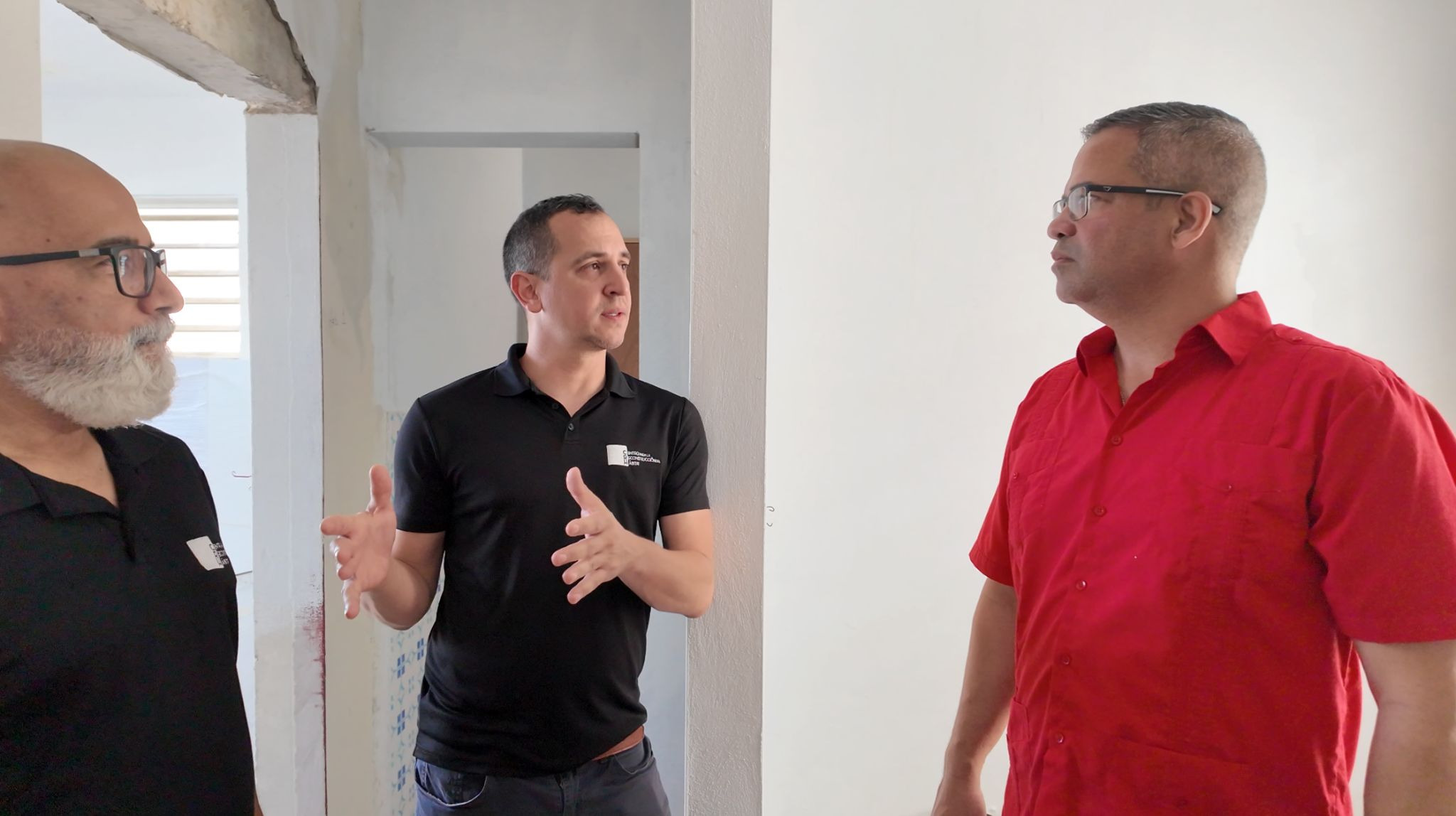
“Look at this—just seeing it is enough. It’s promising,” said Cuca, whose given name is María Nieves, while she was accompanied by Susana Pesquera, an attorney with the Center for Habitat Reconstruction (CRH, in Spanish).
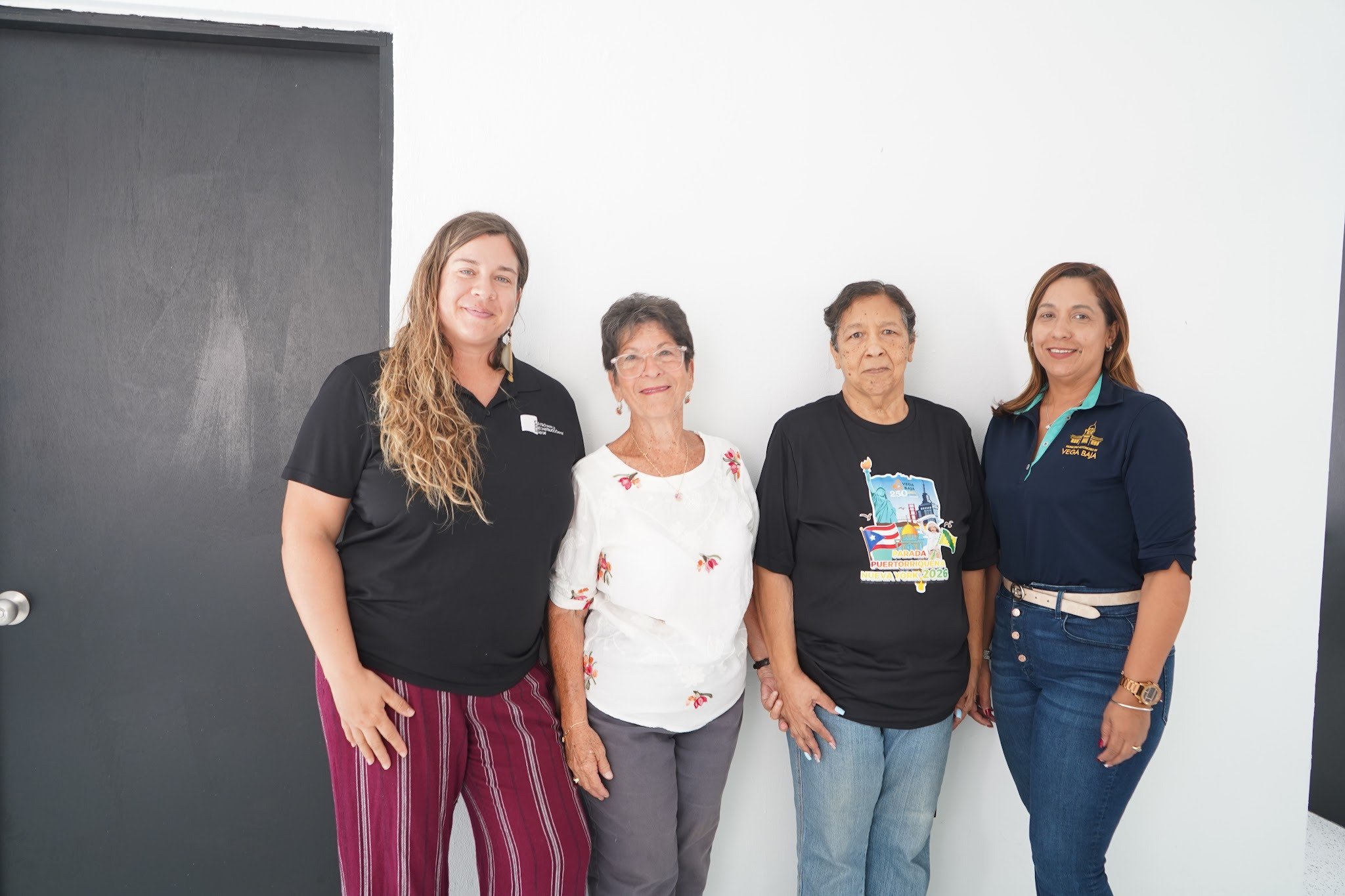
The renovation of the first property for sale under Puerto Rico’s land bank model was made possible, in part, by a $75,000 line of credit arranged by the CRH. The loan was done in response to the restrictive conditions imposed by traditional financial institutions when granting loans to nonprofit organizations, according to Pesquera.
Through the 2020 Municipal Code, the CRH promoted the creation of land banks—public or semipublic entities that acquire unused properties to meet community needs. In addition to Vega Baja, the municipalities of Hormigueros, Guánica, and Adjuntas have active land bank corporations.
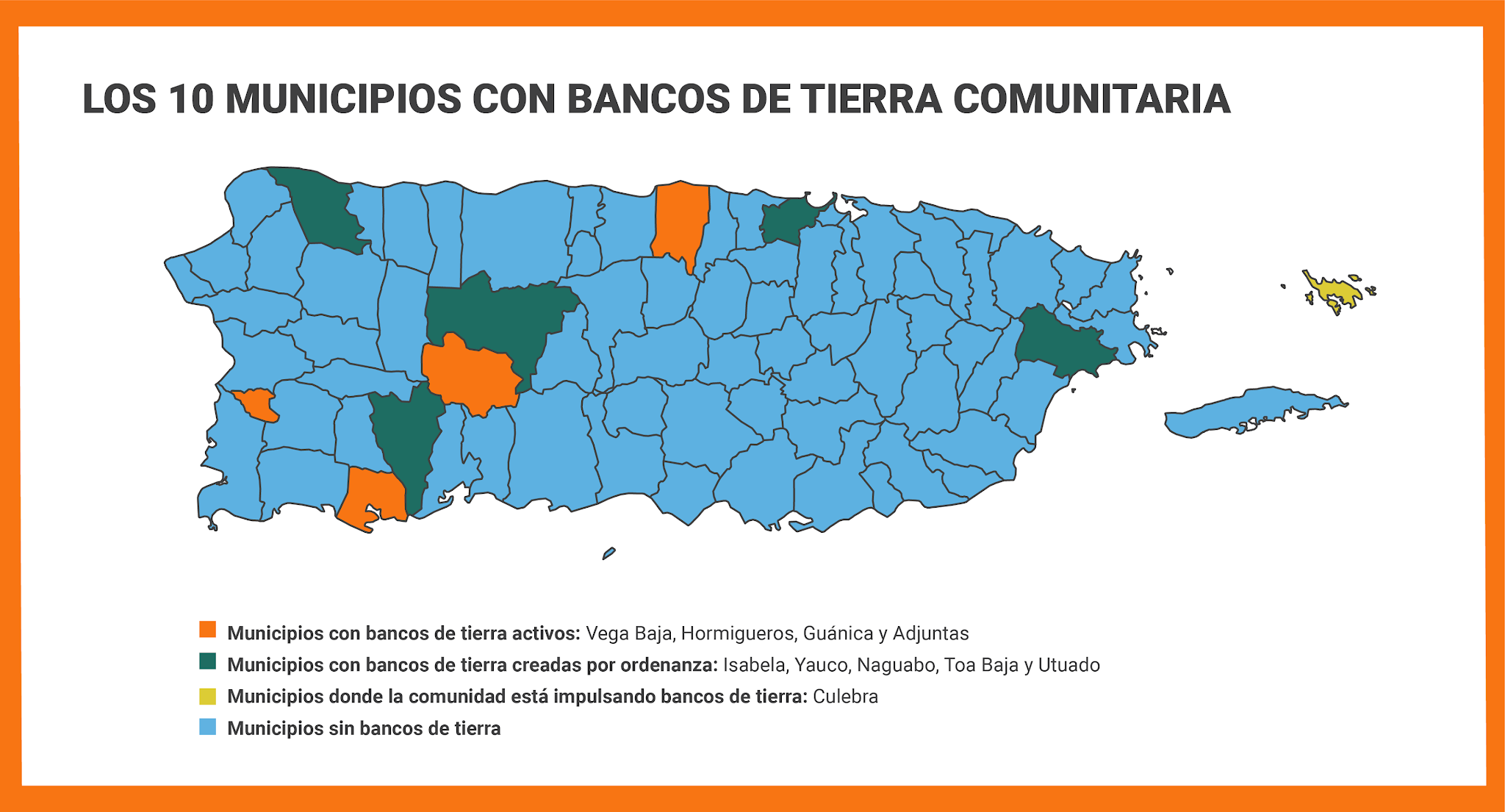
CRH expects the land banks in Vega Baja and Hormigueros—which have made the most progress thus far—to sell their first homes this year.
Wanting to Remain in Puerto Rico
Although the land banks are just getting started in Puerto Rico, this model exists elsewhere and has proven to help people stay in their communities.
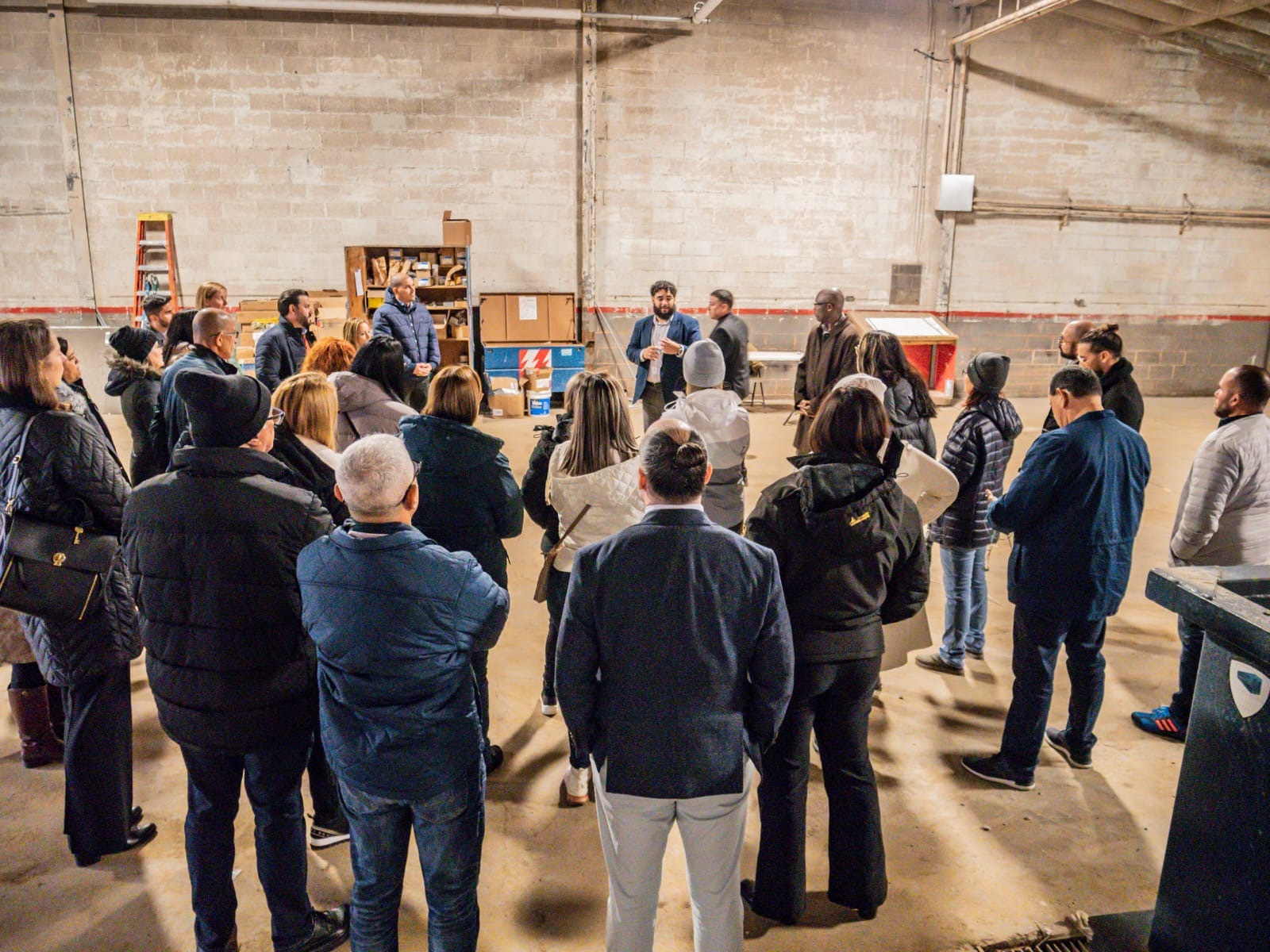
In fact, when the CRH Fund had not even been created, the organization took a group of 11 mayors and municipal representatives on a visit to Cleveland (Ohio). The Cuyahoga Land Bank, in that state, has a 17 year history, in which it has reduced the number of abandoned properties in the county by 85% through a combination of demolition and renovation, according to its president Ricardo León. To date, they’ve demolished nearly 11,000 properties, renovated 2,700, and built 250 new homes.
One of its major triumphs over displacement was in Clark-Fulton, a Hispanic neighborhood—historically home to Puerto Ricans—. In 2018, the public hospital announced a $1.2 billion investment in its campus. Overnight, home prices jumped from $20,000 to $100,000. In collaboration with the Metro West Community Development Organization (CDO) and Habitat for Humanity, the land bank built more than 65 affordable homes for homeownership and 200 for rent, said León, who at the time was the executive director of Metro West CDO.
“We’ve been able to keep our community in an area where, historically—for about 50 years—they’ve lived,” celebrated León whose family migrated from Puerto Rico when he was two years old and has since lived in Cleveland.
Community leader Carmen Otero wants that outcome for her hometown.
“Our intention is to repopulate our town. That is our commitment. Seeing so many people in need of a home and so many abandoned homes encouraged us to take action,” said Otero, whose first cry as a newborn was on these streets, held in the arms of a midwife, towards the end of 1950.
In the last ten years, Vega Baja has lost 3% of its population, slightly less than the 4% population reduction that Puerto Rico has experienced during the same period.
The Creation of the CRH Fund
Limited by a lack of capital to repair properties and sell them to individuals with low or moderate incomes, CRH Executive Director Luis Gallardo discovered that cities like Atlanta were turning to Community Development Financial Institutions (CDFIs)—entities certified by the federal government to provide accessible loans to underserved communities. Although there are 81 credit unions and three other funds certified as CDFIs in the archipelago, none of them focus exclusively on abandoned properties. The CRH Fund would be the first to do so, if approved by the U.S. Department of the Treasury.
To date, the CRH Fund has secured $1 million in grants, including $500,000 from the National Association for Latino Community Asset Builders (NALCAB), $250,000 from PolicyLink, $200,000 from the Federal Home Loan Bank of New York, and $50,000 from the Hispanic Federation. The U.S. Department of Housing and Urban Development also awarded it $100,000 through the Section 4 program, which empowers nonprofit organizations to invest in affordable housing.
Deepak Lamba-Nieves, director of Infrastructure and Strategic Initiatives for Puerto Rico at PolicyLink, noted that some mayors have opted to auction off the properties and enter into sales contracts, which provides short-term influx.
“In the long term, it does not help solve a real and complex problem, which is how to provide affordable housing in perpetuity. The land bank solution turns out to be innovative. The CRH has been taking a step-by-step approach to identifying not only the need but also the key technical solutions to make it a reality. It has been an extremely enlightening process,” commented Lamba-Nieves, in an interview with 9 Millones.
Gallardo explained that banks typically prefer to stick with very safe products, such as Federal Housing Administration-insured mortgage loans or 30-year mortgages. However, he added, even when financial institutions do grant loans, they tend to carry very high interest rates, whereas the CRH Fund offers 0% interest loans specifically designed to make land banks viable.
Beyond financing, one of the main challenges they have identified is the time it takes to complete a transaction, especially when buyers participate in Housing and Urban Development assistance programs. According to Gallardo, some homes have been waiting six months to close on a sale due to U.S. government requirements for disbursing funds from the Community Development Block Grant for Mitigation (CDBG-MIT). This is the case in Vega Baja, where a young worker accepted the option to purchase the white concrete house in the town center. The Board of Directors of that land bank established as a requirement that the buyer be a beneficiary of the Pronto pa tu casa program, which provides up to $45,000 for each eligible household. Pesquera noted that they prioritized recipients of financial aid, as they are often groups discriminated against by landlords.
As a medium-term alternative, land banks and municipalities are in talks with various cooperatives, seeking to create a program that can help low- and middle-income families purchase and renovate homes from the land banks.
The Vega Baja land bank has 11 properties, transferred by the municipality after being acquired primarily through expropriation—a power the municipality can exercise over private properties that are abandoned or that interfere with public works projects such as roads. Two of the properties deemed public nuisances will be sold in their current condition to raise capital that will allow the rest of the homes to be transformed into affordable housing options, Pesquera said.
A Collaborative Effort
Although the first home’s appraisal has taken five months, residents are already benefiting from the removal of the public eyesore.
According to Otero, the house’s renovation has also provided greater safety for the street, where older adults live, in addition to preventing pests and pollution, thereby improving the quality of life in the community and encouraging generational transition in the area.
Similarly, the enthusiasm for keeping the municipality free of public nuisances, safe, clean, and with affordable housing has grown among Cuca’s neighbors, who live in a community with three public nuisances.
Both leaders are advocates for community needs and view the municipality’s local government as an ally. For this reason, they believe that every municipal administration has the responsibility to bring communities together and, collectively, create a registry of abandoned homes. “If the government is willing to do so, I believe all municipalities could do more,” Otero stated.
On her end, Verónica Bruno—who serves as the liaison between the community, the CRH, and the municipal administration’s Public Nuisances department—says she is motivated by the Board of Directors’ commitment and their desire for every person to have the opportunity to own a small plot of land in the archipelago. “I see their energy when we’re in meetings, and I see the interest they have in their community... They’re always very attentive to everyone,” Bruno said of the community leaders.
Cuca captures the sentiment that sustains the land bank and its volunteers: “I love this town because my four daughters were born here. I have my grandchildren here too, and they want to live in Vega Baja. They want to stay in Puerto Rico.”
Although it remains to be seen how many children and grandchildren from Vega Baja the community land bank will be able to accommodate, the neighbors celebrate that soon one less young person will have to worry about whether to stay or emigrate to the United States.
Alexandra Acosta Vilanova is a freelance journalist who works at the intersection of literature, theater, and journalism.
Laura M. Quintero, editor-in-chief of 9 Millones, contributed to the editing.